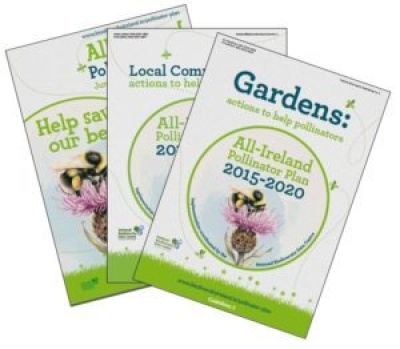
Pollinators - Local Communities: Actions to Help Pollinators
For suggestions on what flowers bees like best, look at the planting suggestions in this guidelines for local communities.
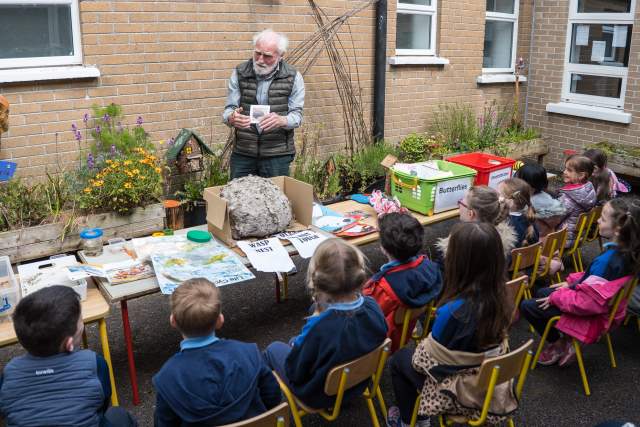
Teach your pupils how to build a giant nest, create a butterfly garden or make their own family tree!
The resources provided here have been submitted by Heritage Experts, teachers or prepared by other educational organisations. The resources are both fun and educational and are designed to inspire and develop an appreciation and curiosity about Ireland’s wonderful natural and cultural heritage.
Resources can be searched for under the following categories:
For suggestions on what flowers bees like best, look at the planting suggestions in this guidelines for local communities.
For suggestions on what flowers bees like best, look at the planting suggestions in this guidelines for gardens.
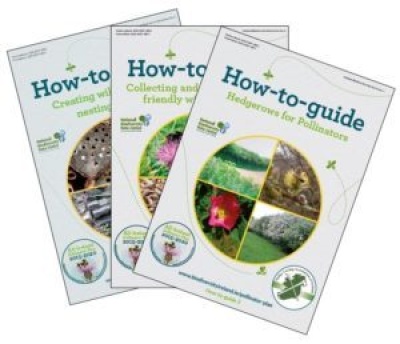
If you have hedgerows in your garden or school, download this guide on how to make them perfect for pollinators.
If you have hedgerows in your garden or school, download this guide on how to make them perfect for pollinators.
If you want to learn how to grow your own Irish wildflowers from seeds you can collect, download this guide on working with wildflower seed.
If you are thinking of buying or making a bee hotel, download this document first to make sure your nesting habitat is perfect for our bees!
Encourage the children to engage with the landscape of the surrounding areas, the land and layout of their area and how it can change with new building works.
Read moreRead lessThings To do
1. Download the Where We Live worksheet below and ask the children to draw a map of their trip to school, showing the major landmarks on their way.
2. Bring the children to the local park and point out the little hills and mounds that make up that landscape and ask them to draw a picture of the park.
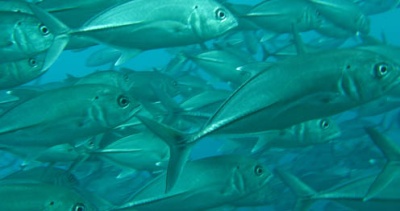
Fish are animals that are cold-blooded, have fins and a backbone. Most fish have scales and breathe with gills. They’re one of the oldest animal families to live on Earth. They were here long before the dinosaurs – about 500 million years ago — and they still thrive. There are over 25,000 known species of fish. There are probably many more that we haven’t discovered yet.
Read moreRead lessFish are vertebrates. That means they have a backbone. But unlike mammals, fish don’t have lungs. They breathe by taking oxygen from the water in through their mouths, where it passes over the gills. The gills then absorb oxygen from the water and send the oxygen throughout the body. Some fish are carnivores. They eat other fish and small animals and insects. Other fish are omnivores, eating both plants and animals.
Encourage the children to recognise what they are eating and where it comes from. Explain the difference between root and leaf vegetables and the importance of eating their five portions of vegetables a day through using the resources below.
Read moreRead lessThings To do
1. Download the activity sheet Veggie Delight Worksheet below and ask the children to name the vegetables and everyday foods that are made from the products.
2. Download the Maps of Ireland handout below and ask the children which county the vegetables come from.
3. Look at a map of the world and ask the children which country their favourite fruit comes from.
It’s big and round and keeps us warm, but find out what else the sun can do!
Read moreRead lessThings To do
1. Tell the time?
You will need:
Directions:
2. Download and printout the Sundial Worksheet below on card and make a sun dial.
You will need:
Directions:
With so many opportunities to enjoy the outdoors during the summer months, we could easily be fooled into thinking that biodiversity only makes an appearance during summer, but of course we know different.
From the time when swallows start gathering on telephone lines to make the journey to Africa, right through to the first one arriving back on our shores and signalling the beginning of summer, there is still so much to see and enjoy. Can you remember, or imagine, getting your first diary as a child, and keeping it for a year
Shane Casey, Biodiversity Officer, Clare County Council gives us a little glimpse of what adventures might be encountered each month in the PDF below!
The Heritage Office of Kilkenny County Council has developed eight lesson plans, which will be useful for teachers of 4th, 5th and 6th class groups, on aspects of the River Nore's heritage. They are designed to be used in conjunction with the ‘Explore the Nore’ poster (downloadable below).
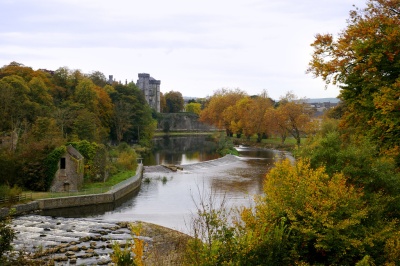
Read moreRead lessThe river Nore (An Fheoir) rises in the Devil’s Bit Mountain in Co. Tipperary. It then flows through County Laois and enters County Kilkenny at the townland of Ballynaslee. It flows through Co. Kilkenny, before flowing into the River Barrow a few kilometres north of New Ross.
It is known as one of the Three Sisters Rivers (Barrow, Nore, Suir). The River Nore is 140km in length and drains an area of approximately 861 hectares. It has a very steep gradient, but this is lessened by the many weirs built along its length.
This project is kindly supported by the Kilkenny Education Centre and the Heritage Council.
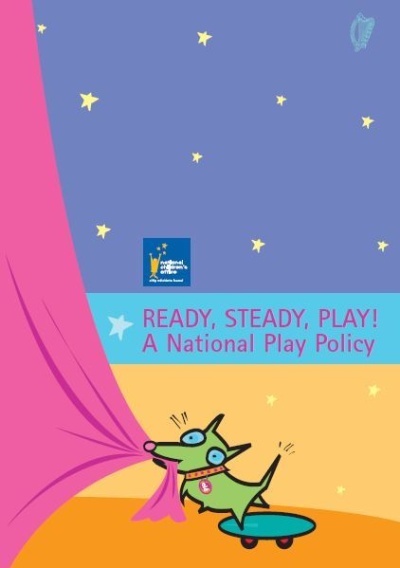
This is the most recent national policy document available in relation to children and the outdoors. The objective of this policy is to plan for an increase in public play facilities, thereby improving the quality of life of children living in Ireland by providing them with more play opportunities. The document is an outcome of the National Children’s Strategy, launched in 2000 and is aimed specifically at addressing the needs of younger children.
Read moreRead lessThe policy looks at a range of issues, including: guiding principles; a partnership approach between the statutory, community, voluntary and private sectors; developing a play infrastructure; safety and public liability insurance; and funding arrangements.
This booklet is for parents and carers of young children up to the age of six, although most of the information applies to children of all ages. It highlights the benefits of outdoor play and shows how playing outside supports your child’s development.
Aistear is the curriculum framework for children from birth to six years in Ireland. It describes learning and development through the four interconnected themes of Well-being, Identity and Belonging, Communicating, and Exploring and Thinking. Chapter 3 – ‘Learning & Developing through Play’ outlines how play relates to these themes and how best to facilitate play among young children.
This research, commissioned by Heritage Council, was undertaken in order to understand the types of activities that today's adults undertook as children, and the extent to which their own children undertake the same activities today.
The objective of this research, commissioned by the Heritage Council, was to review existing research and relevant literature around children’s relationship with the outdoors and natural heritage from a children’s rights perspective. This included examining and analysing current trends and identifying gaps in the research on this subject, particularly in the Irish context.
The PDFs below provide a history of local government in Kilkenny, encouraging the children to become familiar with important events in the history of the locality and referring to the wider national context where relevant.
Theobald Fitzwalter, an English nobleman, came with the young Prince John, to Ireland in 1185. The prince gave Fitzwalter a large area of land and the important job of Chief Butler of Ireland. This meant that if the king was visiting Ireland, the Chief Butler had to make sure there was plenty of food and drink ready for him and for the group travelling with him. Download the full PDF below for the full story of the Butler family.
Read moreRead lessThis resource encourages the children to become familiar with important events in the history of the locality, referring to the wider national context where relevant.
An introduction into different types of buildings that are in the locality.
Read moreRead lessThings To do
1. Go on a building ramble. Ask the children to look at the different types of houses that are in their neighbourhood. Do a mini survey of where they live and what kind of house/ apartment they live in.
2. Download the Front Doors worksheet below and draw a picture of four different doors they see on their way to school.
3. Tell the three Little Pigs Story and get the children to draw the three different types of houses.
Content of the study
Children should learn about:
1. The cause and effect of the flood.
2. The River Nore and how it has changed from the time of the flood.
3. The story of the flood as told in the Kilkenny People.
4. Memories of people about the 1947 flood.
Skills and concepts development
Children should be able to:
1. Time and Chronology:
2. Change and continuity:
3. Cause and effect:
4. Using evidence:
5. Synthesis and Communication:
5. Empathy:
Methodologies
Assessment
Shane Casey, the Biodiversity Officer for Clare County Council has provided us with some of his entertaining children's stories inspired by nature!
Read moreRead lessAlfred's Big Adventure is all about the antics of an ant, which takes place in the great expanse of a back garden! It's a great way of engaging younger pupils with what's going on just outside their backdoor.
The Secret Diary is aimed at slightly older children and contains some funny and engaging commentaries on the changing seasons, a really lovely way to engage children with the changes taking place in nature throughout the year.
The Agony 'Ant' is great fun and highly entertaining. Children should get a real kick out of the disgruntled inhabitants of the natural world, including a very upset tree who wants advice on how to rid himself of the nesting 'squatters' on his branches!
St. Kieran’s Street in Kilkenny is named after St. Kieran's Well and the site of an ancient church at its northern end. In times past it was named Low Lane, Back Lane and King Street. The presentation, walking trail and worksheets below allow the children to discover the rich heritage of the street first hand.
Read moreRead lessThis resource ties in to the strand unit, ‘my locality throughout the ages’, which requires the children to become familiar with important events in the history of the locality, referring to the wider national context where relevant.
Roscommon Castle is a dramatic and imposing 13th Century Norman Castle. It was built in 1269 by Robert de Ufford, on lands he had seized from the Augustinian Priory. The castle has a tumultuous past which can be explored with junior level children in the presentation below.
Read moreRead lessToday, the Castle's past can be visited while enjoying adjacent Loughnaneane Park and Playground, a 14 acre recreational area. The natural features of the park include a turlough and a wildlife conservation area which is a habitat of unique flora and fauna.
Image by Mike Searle and licensed for reuse under this Creative Commons Licence.