Teachers' Resources | Heritage in Schools

Teachers' Resources

Teach your pupils how to build a giant nest, create a butterfly garden or make their own family tree!

The resources provided here have been submitted by Heritage Experts, teachers or prepared by other educational organisations. The resources are both fun and educational and are designed to inspire and develop an appreciation and curiosity about Ireland’s wonderful natural and cultural heritage.

Resources can be searched for under the following categories:

PDF

Heritage at Play

Natural environments (Geography), Human environments (Geography), Story (History), Local studies (History), Early people and ancient stories (History), Life, society, work and culture in the past (History), Politics, conflict and society (History), Continuity and change over time (History), Environmental awareness and care (Geography/Science), Living things (Science), Energy and forces (Science), Materials (Science) Science, History, Geography

A series of instruction guides on how to explore our built, natural and cultural heritage through Lego. These instructions were designed by Heritage in Schools Specialist and Lego brick artist Jessica Farrell.

Built heritage - buildings, monuments and structures

Cultural heritage - customs, music, traditions, crafts and skills

Natural heritage - wildlife and habitats in water and on land

Puffin Rock Habitats: workshop facilitators guide

Natural environments (Geography), Environmental awareness and care (Geography/Science), Living things (Science) Science, Geography

Puffin Rock celebrates Ireland's magnificent natural environment and features themes of climate change, belonging, resilience, and friendship. Through adventures, big and small - the characters
highlight the importance of protecting nature and wildlife.

The story connects Ireland to faraway lands through the underlying narrative of changing climatic conditions and habitat loss across the globe. As creatures relocate to Puffin Rock, they uncover connections across species and habitats.
The relationships and artwork create an implicit emphasis on the wonder and value of each living form.

This book was produced in partnership by the Heritage Council and Cartoon Saloon, inspired by the engagement from the touring exhibition “Puffin Rock Habitats”.

LIFE IP Wild Atlantic Nature - Blanket bog school programme resources

Natural environments (Geography), Environmental awareness and care (Geography/Science), Living things (Science), Energy and forces (Science), Materials (Science) Science, Geography

LIFE IP Wild Atlantic Nature works with landowners and local communities to conserve and improve the quality of blanket bogs and associated habitats in the northwest of Ireland. The Heritage Council is one of several partners in the project and was tasked with the action to develop, and pilot test a schools’ programme in 2022. 

The aim would be to promote local awareness of the LIFE IP Wild Atlantic Nature project amongst schools and involve children in assessing a local blanket bog habitat using a scorecard. The hands-on, practical involvement would introduce children to the project and their local blanket bogs and build enthusiasm for blanket bogs generally - an enthusiasm which, it was hoped, they would share with their families, friends, and neighbours. The suite of resources were developed by the Irish Peatland Conservation Council and Aengus Kennedy (NatureNorthWest) with input from the project partners.

To find out more about the LIFE IP Wild Atlantic Nature project visit https://www.wildatlanticnature...

Hedgerow Toolkit for Schools

Natural environments (Geography), Environmental awareness and care (Geography/Science), Living things (Science), Energy and forces (Science) Science, Geography

An introduction to Irish hedgerows and their benefits with lesson plans and resources for primary schools developed by Dún Laoghaire-Rathdown County Council. 

Irish hedgerows stretch for an incredible 689,000km up and down the roads and fields of Ireland. This is the equivalent of wrapping around the earth 17 times!

The hedgerow toolkit includes lesson plans with information on curriculum links and integration, learning activities, objectives and outcomes along with resources such as a classroom wall poster and hedgerow plants identification sheet.

Ogham Stones in Ireland

Story (History), Local studies (History), Early people and ancient stories (History), Life, society, work and culture in the past (History) History

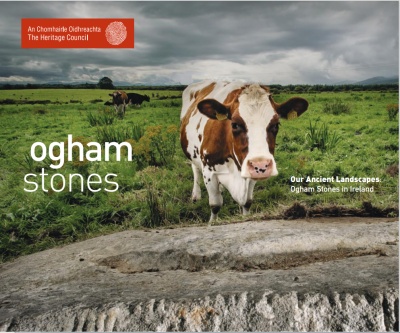
Before people in Ireland starting writing in manuscripts made of vellum they wrote on other materials, primarily stone, in a writing system called ogham. Our earliest ogham inscriptions on stone are dated on linguistic grounds to between the 4th and the 7th century AD. Over 400 known examples of ogham stones and fragments of various shapes and sizes have survived, each with their own unique biography or story.

The ogham publication by Dr Nora White is part of the Heritage Council Our Ancient Landscapes series and follows on from the 2020 publication on prehistoric rock art. This latest publication features high quality colour illustrations from Ken Williams, the National Monuments Service, the National Museum of Ireland, the Discovery Programme and Dr Nora White.

Dr Nora White was Principal Investigator on the Ogham in 3D project (https://ogham.celt.dias.ie). She is currently a Postdoctoral researcher on the Irish Research Council/UK Arts and Humanities Research Council funded OG(H)AM project in the Department of Early Irish at Maynooth University. She has been a member of the Heritage Council’s Heritage in Schools panel since 2018 and has been leading the Knockboy church, Co Waterford, Adopt a Monument conservation project.

Computer Scientists:History-at-home with EPIC

Life, society, work and culture in the past (History) History

Discover the Irishwoman who helped invent the first general purpose computer and tracked missiles during WWII, and learn how to become a computer programmer yourself. Jam-packed with ‘unplugged’ quizzes, puzzles and activities for children 8+.

EPIC - the Irish Emigration Museum has developed a series of virtual educational experiences, from downloadable history-at-home packs to online workshops/lectures and informative videos. Look, learn, and create together with fun, engaging programmes for students of all ages.

See more at: https://epicchq.com/education/..

Easter Rising: History-at-home with EPIC

Life, society, work and culture in the past (History), Eras of change and conflict (History), Politics, conflict and society (History) History

Discover some of Ireland’s quirkiest Easter traditions, explore the world of Easter Rising leader Roger Casement and learn how to draw up your own Proclamation. Includes puzzles, quizzes and games for children 8+.

EPIC - the Irish Emigration Museum has developed a series of virtual educational experiences, from downloadable history-at-home packs to online workshops/lectures and informative videos. Look, learn, and create together with fun, engaging programmes for students of all ages.

See more at: https://epicchq.com/education/...

The Great Famine: History-at-home with EPIC

Story (History), Local studies (History), Early people and ancient stories (History), Life, society, work and culture in the past (History), Eras of change and conflict (History), Politics, conflict and society (History), Continuity and change over time (History) History

Discover the conditions and circumstances that led to The Great Famine of 1845 – 1852, and caused the death of 1 million people and another 1.5 million to leave Ireland. Includes puzzles, quizzes and games for children 8+.

EPIC - the Irish Emigration Museum has developed a series of virtual educational experiences, from downloadable history-at-home packs to online workshops/lectures and informative videos. Look, learn, and create together with fun, engaging programmes for students of all ages.

See more at: https://epicchq.com/education/...

Viking Age Dublin - walking tour and activity book

Story (History), Local studies (History), Early people and ancient stories (History), Life, society, work and culture in the past (History), Eras of change and conflict (History), Politics, conflict and society (History), Continuity and change over time (History) History

A self-guided walking tour of Viking Dublin aimed at 8-12 year olds with activities, riddles and games.

It is a natural fit with the SESE History curriculum as it covers many of the strands from Early Peoples and Ancient Societies, to Story, to Life, society, work, and culture in the past, and Continuity and Change over time. It engages children with assessing evidence, understanding chronology, and expanding communication skills under the Working as a Historian skills and concept development.

This project is a collaboration between academics from Dublin, Cambridge, Nottingham and London, with the assistance of Dublinia, the National Museum, Dublin City Council and the School of Irish Archaeology.

Gardening for Biodiversity

Natural environments (Geography), Environmental awareness and care (Geography/Science), Living things (Science), Energy and forces (Science) Science, Geography

A booklet to assist everyone to help wildlife in their gardens. The brainchild of Juanita Browne, the booklet was produced by Laois County Council with the assistance of Local Authority Heritage Officers across Ireland, with support from the National Parks and Wildlife Service and the Heritage Council.

Taking a very practical approach, the book details projects to help wildlife of all kinds under a range of headings, with tasks suitable for everyone from the total beginner to the more ambitious DIY enthusiast. With clear instructions and step-by-step drawings by illustrator Barry Reynolds, the guide offers the gardener lots of options to help our biodiversity.

A colouring book for children using the beautiful garden wildlife illustrations by Barry Reynolds has also been produced.

Protecting Farmland Pollinators: newsletter for farming kids (April 2020)

Environmental awareness and care (Geography/Science), Living things (Science), Energy and forces (Science) Science

A pollinator newsletter for children on Protecting Farmland Pollinators. Learn about Pollinator Science, History and Geography with games, puzzles, art and competitions.

Protecting Farmland Pollinators is a European Innovation Partnership (EIP) project funded by the Department of Agriculture, Food and the Marine (DAFM) under the Rural Development Programme 2014-2020. The project is coordinated by the National Biodiversity Data Centre. The National Biodiversity Data Centre is an initiative of the Heritage Council.


Discover the Walled Towns of Ireland: a workbook for primary school children

Human environments (Geography), Story (History), Local studies (History), Early people and ancient stories (History), Life, society, work and culture in the past (History), Eras of change and conflict (History), Politics, conflict and society (History), Continuity and change over time (History) History, Geography

The Irish Walled Towns Network (IWTN) was formed by the Heritage Council in 2005 to help the walled towns of Ireland become better places in which to live, work and visit. The island of Ireland has 56 known walled towns, 29 of which have joined the IWTN.

A lovely workbook for primary school children introducing them to the the walled towns of Ireland.

Nature in the Park - a self-guided handbook for primary school teachers to facilitate the use of local parks as outdoor classrooms

Natural environments (Geography), Environmental awareness and care (Geography/Science), Living things (Science), Energy and forces (Science), Materials (Science) Science, Geography

A self-guided handbook for primary school teachers to facilitate the use of local parks as outdoor classrooms. Published by Dublin City Council and an action of the Dublin City Biodiversity Action Plan 2015-2020

Wild things at School by Éanna Ní Lamhna

Natural environments (Geography), Environmental awareness and care (Geography/Science), Living things (Science), Energy and forces (Science), Materials (Science) Science

Counties Laois, Meath and Monaghan came together with Éanna Ní Lamhna to develop this book and series of worksheets for Primary School teachers called Wild Things at School as a joint project under the County Heritage Plan Scheme.

The Heritage Council co-funded the publications however it does not have hard copies of the publication.

Sir Walter Raleigh's Treasure Trail and Activity Booklet

Local studies (History), Early people and ancient stories (History), Life, society, work and culture in the past (History), Eras of change and conflict (History), Politics, conflict and society (History), Continuity and change over time (History) History

Sir Walter Raleigh's Treasure Trail

Highlights of things to see and do in Youghal’s Raleigh Quarter. Download brochure for detail on wonderful sights and unique history.


Youghal-treasure-trail.jpg#asset:3186

All-Ireland Pollinator Plan - Junior version

Natural environments (Geography), Environmental awareness and care (Geography/Science), Living things (Science) Science

How Can Schools Help Pollinators?

In 2015 bee experts in Ireland came together to produce the All-Ireland Pollinator Plan 2015-2020. We did this because our pollinators, especially our bees, are in big trouble. We need bees to grow our fruit and veg, and to make sure our countryside has lots of beautiful wildflowers. Now we need your help to make Ireland a better place for bees and other pollinators. We need you to tell everyone how important bees are. We also need you to make your school and garden a safe place for bees to live.

Visit the website of the National Biodiversity Data Centre for more information and guidelines on what schools can do to help pollinators http://www.biodiversityireland...

Irish Walled Towns

Local studies (History), Early people and ancient stories (History), Life, society, work and culture in the past (History), Eras of change and conflict (History), Politics, conflict and society (History), Continuity and change over time (History) History

The history of Ireland can literally be found in its walled towns. You can find lots of information on them on the Irish Walled Towns Network website listed below and information on European walled towns on the other website listed.

Things To do
1.    Have a mini-medieval festival!
2.    Download the Shield worksheet below and design your own family shield, using icons and symbols to represent your family.

Pollinators: Actions to Help Pollinators

Natural environments (Geography), Environmental awareness and care (Geography/Science), Living things (Science) Science

You may have heard that our bees and other pollinating insects are in trouble. The good news is that you can help by making your garden pollinator friendly. Every garden, no matter its size, can be a haven for hungry pollinators.

Register your school garden on with the 'Actions for Pollinators'  mapping system to track the build-up of food and shelter for pollinators in your school garden.

Use the mapping system to check out what other gardens in Ireland are doing to help pollinators.

The actions that this website tracks align with a series of pollinator friendly guidelines. For example, the guideline document for Gardens suggests 20 possible actions suitable for any type of garden. You can download the Garden Guideline from the Pollinator Plan’s website:

www.biodiversityireland.ie/pol...

Once you've identified the changes you'd like to make to your school garden register your garden on the mapping system. Instructions on registering and using the mapping system can be downloaded here http://www.biodiversityireland...