Teachers' Resources | Heritage in Schools Skip to main content

Teachers' Resources

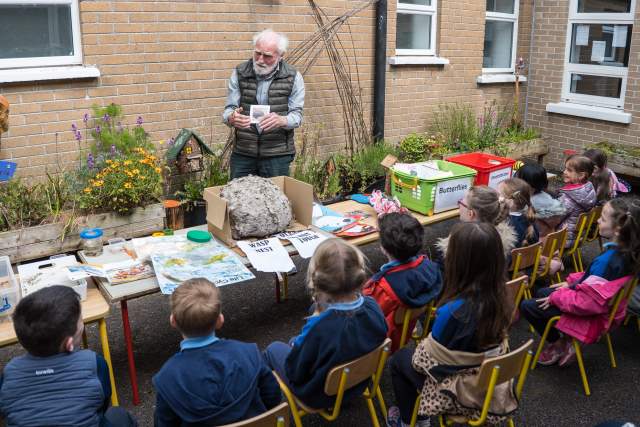
Teach your pupils how to build a giant nest, create a butterfly garden or make their own family tree!

The resources provided here have been submitted by Heritage Experts, teachers or prepared by other educational organisations. The resources are both fun and educational and are designed to inspire and develop an appreciation and curiosity about Ireland’s wonderful natural and cultural heritage.

Resources can be searched for under the following categories:

Science

Pollinator lesson plans

Science, Geography

A resource for primary schools - supporting the All-Ireland Pollinator Plan for a sustainable future.

In March 2025, the All-Ireland Pollinator Plan released a redesigned suite of lesson plans in collaboration with Laois County Council. These lesson plans are suitable for junior infants to 6th class and include a range of hands-on activities to help embed pollinator conservation in the classroom.

Puffin Rock Habitats: workshop facilitators guide

Science, Geography

Puffin Rock celebrates Ireland's magnificent natural environment and features themes of climate change, belonging, resilience, and friendship. Through adventures, big and small - the characters
highlight the importance of protecting nature and wildlife.

The story connects Ireland to faraway lands through the underlying narrative of changing climatic conditions and habitat loss across the globe. As creatures relocate to Puffin Rock, they uncover connections across species and habitats.
The relationships and artwork create an implicit emphasis on the wonder and value of each living form.

This book was produced in partnership by the Heritage Council and Cartoon Saloon, inspired by the engagement from the touring exhibition “Puffin Rock Habitats”.

LIFE IP Wild Atlantic Nature - Blanket bog school programme resources

Science, Geography

LIFE IP Wild Atlantic Nature works with landowners and local communities to conserve and improve the quality of blanket bogs and associated habitats in the northwest of Ireland. The Heritage Council is one of several partners in the project and was tasked with the action to develop, and pilot test a schools’ programme in 2022. 

The aim would be to promote local awareness of the LIFE IP Wild Atlantic Nature project amongst schools and involve children in assessing a local blanket bog habitat using a scorecard. The hands-on, practical involvement would introduce children to the project and their local blanket bogs and build enthusiasm for blanket bogs generally - an enthusiasm which, it was hoped, they would share with their families, friends, and neighbours. The suite of resources were developed by the Irish Peatland Conservation Council and Aengus Kennedy (NatureNorthWest) with input from the project partners.

To find out more about the LIFE IP Wild Atlantic Nature project visit https://www.wildatlanticnature...

Hedgerow Toolkit for Schools

Science, Geography

An introduction to Irish hedgerows and their benefits with lesson plans and resources for primary schools developed by Dún Laoghaire-Rathdown County Council. 

Irish hedgerows stretch for an incredible 689,000km up and down the roads and fields of Ireland. This is the equivalent of wrapping around the earth 17 times!

The hedgerow toolkit includes lesson plans with information on curriculum links and integration, learning activities, objectives and outcomes along with resources such as a classroom wall poster and hedgerow plants identification sheet.

Gairdín Mháire na mBláth

Science, Geography

Gairdín Mháire na mBláth is the latest offering from leading author-illustrator Tatyana Feeney. Beautifully illustrated, this book tells the heartwarming story of Máire na mBláth who, on noticing one day that there are no flowers planted in her local school, decides to share her gardening skills with the pupils. Between them, they plant a beautiful garden at the school.

In this short video Éanna Ní Lamhna talks about bees, flowers, pollination and this book from the beautiful Vandeleur Walled Gardens in Kilrush.

The Year Round Organic School Garden: A guide to designing, creating and using an organic school garden

Science, Geography

A practical guide for teachers and other education practitioners who wish to bring nature, native habitats and biodiversity into the school grounds. The book aims to help with the planning, design, creation and use of an organic school garden with and for students.

It demonstrates the huge possibilities of designing and developing the school grounds into a highly stimulating and interactive educational resource, with organic food production and biodiversity as its central themes.

The book has unlimited cross-curricular potential. It particularly ties in with Social, Environmental and Scientific Education (SESE), Social, Personal and Health Education (SPHE), Wellbeing, Art, Languages, History and Maths.

It sets out practical projects on growing local food, creating biodiversity and native habitats in the school grounds, and encourages healthy eating, nature-based activities and getting students active.

Available to order from the following sites:

Let's go Fishing!: Beth Murphy

Science, History, Geography

An introduction to the ancient world of weaving and basket making including step-by-step instruction from Beth on how to weave a fish from willow or materials you might have at home.

How to make a biodiversity map of your garden: Michele Castiaux

Science, Geography

A step by step tutorial showing you how to draw a biodiversity/habitat map of your garden so that you can record where different garden species are located.

Suited to children from 3rd to 6th classes.

Let your imagination go wild! Mary Wallace

Science, Geography

An introduction to wild garlic as a native Irish herb that has been eaten in Ireland for thousands of year with a recipe for a delicious pesto.

Suited to children from 3rd to 6th class

A plant with a past: Paddy Madden

Science, History

This tutorial links a common wild plant, Charlock or Praiseach Bhuí to the Great Famine.

Suited to children from 4th to 6th class.

Discovering the hidden world of moths: Albert Nolan

Science

This tutorial will help students to discover and understand the hidden world of moths and their importance in maintaining a healthy environment.

Suited to children of all ages.

Oak gall ink: Maura Brennan

Science, History, Geography

In this tutorial Maura demonstrates how oak gall ink is made and includes a simplified recipe which can be made from household vinegar.

Suited to children from 2nd to 6th classes.

A story to tell: Chris Thompson

Science, History, Geography

Children are encouraged to examine the heritage significance of their immediate environment through familiar local landscape features.

Suited to children from 2nd to 4th class.

The example of an old tree is used in this tutorial. The activity encourages children to consider questions about past, present and future through personification and the creation of an unusual pictorial poem at the same time. The activity can be applied to other local features, a road, an old building etc.

How to build an insect hotel: Kay Synott

Science

Kay's tutorial, filmed in a woodland, demonstrates how to build an insect hotel with materials found at home and in a garden or woodland.

Suited to children from 2nd to 6th class

Beetles in my backyard: Nessa Darcy

Science

Learn how to create a pitfall trap in your garden to catch live ground beetles and other invertebrates for a closer look.

Suited to children from 2nd to 6th class.

Dáithí and the Woodlice: Martina Butler

Science

This tutorial shows children how to find nature (Woodlice) in their own back yard. Woodlice can be found in most outdoor locations.

Suited to children of all ages.

Making a 3D map of your walk: Úna Halpin

Science, Geography

This tutorial encourages children to explore and record their local heritage by taking a walk locally and making a 3D map of what they have seen.

Suited to children of all ages.

Solitary bee hotels: Dale Treadwell

Science

Dale and Nathan show us how to construct a solitary bee hotel from materials you'll find at home.

Suited to children of all ages.

Native flora in our hedgerows: Niamh O'Flynn

Science, Geography

Niamh illustrates some plants from hedgerows: foxglove, herb robert, vetch, honeysuckle, nettles, gorse/ furze, hawthorn at stages of develeopment, decay and reseeding.

Suitable for children from 2nd to 6th class

Nettle cordage: Maura Brennan

Science, History, Geography

Discover the natural resources growing near your own doorstep! Learn about sustainable plant fibres as we learn how to process nettles to make cordage.

The story of wool: Susanna Anker

Science, History, Geography

Susanna demonstrates the story of wool from carding to spinning to dyeing and weaving.

Suitable for children from 1st to 6th class

All about potatoes: Roisín Cotter

Science

Learning how to grow potatoes is a skill for life and a small step in increasing the sustainability of our everyday lives.

Suited to children from 3rd to 6th class.

Let's hunt for bugs!: Kay Synott

Science

Kay's tutorial, filmed in a garden, shows where to find different invertebrates, how to safely trap and identify them using a pitfall trap.

Suited to children of all ages.