Teachers' Resources | Heritage in Schools

Teachers' Resources

Teach your pupils how to build a giant nest, create a butterfly garden or make their own family tree!

The resources provided here have been submitted by Heritage Experts, teachers or prepared by other educational organisations. The resources are both fun and educational and are designed to inspire and develop an appreciation and curiosity about Ireland’s wonderful natural and cultural heritage.

Resources can be searched for under the following categories:

PDF

Raptors Booket

Environmental awareness and care (Geography/Science), Living things (Science) Science

As top predators, birds of prey, or ‘raptors’ have long been recognised as important indicators of the health of our environment. They are an essential component of a natural and well-balanced countryside. Their position at the top of the food chain also means that raptors are can be used to demonstrate a diverse range of environmental issues

However, more importantly, these top predators command a special interest and respect, particularly with children. Clare, Galway and Tipperary County Councils have collaborated with BirdWatch Ireland and with support from the Heritage Council, have developed workbooks for primary schools focused on the amazing birds of prey in Ireland, from the smallest - which is a falcon called the Merlin, to the largest - which is the enormous White-tailed Eagle.

Through animations, ecological information, fun facts and games, the different raptor species are used to introduce and explore topics such as ecosystems, food chains, conservation threats, and the importance of a healthy environment.

Watch this video piece on Hen Harriers produced by Birdwatch Ireland which was filmed in the Slieve Aughty Mountains, Co. Galway.

Planning A ‘Storywalk’

Natural environments (Geography), Human environments (Geography), Story (History), Local studies (History), Life, society, work and culture in the past (History), Continuity and change over time (History), Environmental awareness and care (Geography/Science), Living things (Science) Science

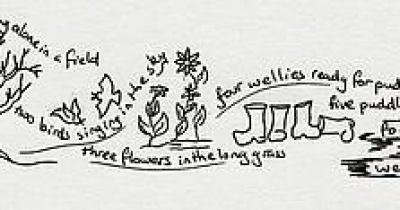
This sheet contains some lovely ideas for creating an adventure with your class when out on a walk. Suggestions include questions you might ask the group, activities you can try out or simply some things to highlight to the children as you go along.

Old Stone Walls

Local studies (History), Life, society, work and culture in the past (History), Continuity and change over time (History), Environmental awareness and care (Geography/Science), Materials (Science) History

In the twentieth century, concrete walls gradually replaced traditional stone walls. In the past, the building material for walls was stone, usually from local quarries. Download the Old Stone Walls information sheet below for more information.

Make A Pop-Up Landscape

Natural environments (Geography), Story (History), Environmental awareness and care (Geography/Science), Materials (Science) General

Pop-up cards are a popular and often enchanting way of drawing ideas together or giving people a chance to integrate their new knowledge of an idea or a place into a quick creative form. There are lots and lots of folds and movements you can use.

Make A Concertina Book

Natural environments (Geography), Human environments (Geography), Story (History), Early people and ancient stories (History), Continuity and change over time (History), Environmental awareness and care (Geography/Science), Materials (Science) Science, History, Geography

This book is quick and easy to make, yet still offers flexibility and potential for children to create their own unique versions. They can be used for everything from storytelling to making guidebooks about a local wood or museum, what they put into your book is up to you!

Little Monsters

Living things (Science) Science

Bugs! In all shapes and sizes, big ones, small ones, long one, tall ones, slow ones, quick ones, with over 1 million known species, it’s time we got to know our neighbours a little better.

Use this task to develop the children’s awareness of these little critters and the great job they do in keeping our ecosystem going: pollinating flowers and crops, aerating and nourishing the soil, providing food for other wildlife and generally maintaining the balance of nature. It also introduces the children to bugs and insects in a non-threatening manner.

Things To do
1.    Find little monsters! Download the Little Monsters worksheet below and bring the children out to the school grounds or local park and ask them to find (but not touch!) the insects and bugs on the sheet.

Leaves and Trees

Natural environments (Geography), Environmental awareness and care (Geography/Science), Living things (Science) Science

Trees are more than just a place for birds to rest! They give air, food, shelter, warmth. It may look like trees just stand around and do nothing. Actually, they are very busy doing a variety of jobs that are essential to animals and the environment.

Things To do
1.    A nature ramble to the local park to collect different types of leaves and see if the children can match them to the Leaf Hunt worksheet below or if this not possible bring in some leaves and see if the children can match them.
2.    Repeat this exercise in all four seasons and explain the differences in the colours and shapes
3.    Take part in National Tree Week and plant a tree in the school grounds.

Learning In The Outdoors: Research By Natural England (2012)

Research and Policy

The UK's Natural Environment White Paper - The Natural Choice: Securing the Value of Nature sets out the need to strengthen the connection between people and nature, and gives an explicit call for every child in England to be given the opportunity to experience and learn about the natural environment.

To help achieve this ambition, the UK Government sets out several key reforms which include a commitment to removing challenges and increasing teachers' and schools' abilities to teach outdoors. It is within this context that Natural England undertook the following three pieces of research which explore different aspects relating to outdoor education.

Kilkenny's Medieval Churches

Story (History), Local studies (History), Early people and ancient stories (History), Life, society, work and culture in the past (History), Continuity and change over time (History) Science, History

There are several medieval churches still to be seen in Kilkenny City. St. Canice’s Cathedral is the most complete. It is called a cathedral because it was built as the principal church of the diocese. It was the special church of the Bishop of Ossory and he had his seat there. This was an actual chair which was called cathedra in Latin. St. Mary’s Church was the Parish Church of Kilkenny in the middle ages

There were three churches which belonged to religious orders: The Black Abbey was part of the Dominican Priory. Besides the church which you can see today, there were lots of other buildings where the priests and lay brothers lived and worked. It also owned some land and had a mill on the river Bregagh. It lay outside the walls of Kilkenny, but was connected to the rest of Kilkenny by a gate. St. Francis Abbey was a Franciscan Friary. Part of its church can be seen from the main gate of Smithwick’s Brewery. This is only part of the original church and there were other buildings, now gone.

Franciscans and Dominicans were known as Mendicant Orders. A mendicant is someone who begs. The mendicant orders were founded to preach the gospel and to serve the poor. Instead of living off the produce of land which they owned, the Mendicant Orders got much of their income from the ordinary people. St. John’s Priory was an Augustinian priory. It was also the Parish Church of St. John’s Parish on the east bank of the River Nore.

Download the information sheets below to find out more about Kilkenny’s Medieval churches.

Kilkenny Water

Natural environments (Geography), Environmental awareness and care (Geography/Science), Living things (Science) Science, History, Geography

The city of Kilkenny is built on the River Nore. The name 'Nore' in Irish is An Fheoir, which probably means the boundary. The river rises far to the north in the Slieve Bloom Mountains between counties Laois and Offaly. The monastery, cathedral and small town which existed before the Norman invasion was built on the west bank of the river. Today the Nore is crossed by three bridges – Green’s Bridge, John’s Bridge and Ossory Bridge.

Download the resources below to explore the history, science and geography relating to Kilkenny’s water.

High Crosses

Early people and ancient stories (History), Life, society, work and culture in the past (History) History

A high cross is a free-standing Christian cross made of stone and often richly decorated. They were raised primarily in Ireland and Britain during the Early Middle Ages and sometimes later. They often, though not always, feature a stone ring around the intersection, forming a Celtic Christian cross.

Things To do
1.    Download the High Cross worksheet below and ask the children to design their own high cross, maybe using symbols that are in use today.

Create A Lace-Up Book

General

This is a good technique for collecting ideas and experiences gradually, perhaps over the course of a workshop or several workshops. It is ideal for collating a series of activities, each one generating a different page and it's easy to add more pages later and let books continue to grow.

Grow Some Celtic Cress

Environmental awareness and care (Geography/Science), Living things (Science) Science

Get the children to recognise what they are eating and were it comes from. Explaining the difference between root and leaf vegetables and the importance of eating their five a day.

Things To do
1.    Grow Celtic Cress (this will take about 4-5 days).

What you will need:
1.    Cress seeds, paper towels and a flat plate.

What to do:
1.    Download the Celtic Cress worksheet below and cut out the first initial of the student’s name.
2.    Wet some towels until they are soaking.
3.    Lay the letter shape onto the towels.
4.    Sprinkle lots of cress seeds in the letter shape. Make sure you cover the whole of the letter shape. Press the seeds down gently.
5.    Lift the letter shape, leaving the seed shapes. Place the plate in a warm sunny spot.
6.    Use a spoon to water around the letter shapes every day. Don’t put water on the seeds.
7.    Watch them grow (around 4-5 days). When the cress is as long as your finger, cut it off and eat it!

Grow A Flower

Environmental awareness and care (Geography/Science), Living things (Science) Science

Not just a pretty face. Flowers can change the world, learn how plants reproduce, and many insects would die without this vital source of nutrients. A flower is the part of the plant that makes the seeds. The main parts of a flower are the carpals and stamens. These parts are often found in the centre of the flower. There are egg cells in the carpel and pollen cells in the stamen. All flowers have four basic parts: sepals, petals, carpals and stamen. Different flowers have different numbers and shapes of these parts.

Things To do
1.    Download the Flower Parts worksheet below and name the parts of a flower.
2.    Grow a plant from seed (this will take about 2 - 3 weeks).

What you will need:
1.    A clean glass jar, paper napkins

What to do:
1.    Rinse the jar in cold water. Empty it out - but do not dry it.
2.    Fold a paper napkin in half, curl it into a circle and slip it inside the jar.
3.    Press the napkin against the side of the jar (let it soak up the remaining water residue).
4.    Peel back part of the napkin and push three seeds (broad bean seeds are good for this) evenly spaced around the inside of the glass jar.
5.    Wet the napkins with lots of water.
6.    Put the jar in a bright warm place (the windowsill is perfect!).
7.    Add water often to keep the napkins wet.
8.    The roots will start to grown first and then the shoots.

Famous Buildings

Story (History), Local studies (History), Early people and ancient stories (History), Life, society, work and culture in the past (History), Eras of change and conflict (History), Politics, conflict and society (History), Continuity and change over time (History) History

Explore buildings of interest and different architectural style around the local neighbourhood, town or village.

Things To do
1.    Download the Famous Buildings worksheet below and ask the children to name the buildings in the pictures.
2.    If possible, take pictures of local landmarks and do a mini 'show-and-tell' about the buildings.
3.    Ask the children to draw a picture of a local landmark and do a mini 'show-and-tell'.

Attract Garden Birds to the School Grounds

Environmental awareness and care (Geography/Science), Living things (Science) Science

Geoff Hunt, one of our very own Heritage Experts, has some great tips for attracting garden birds to your school grounds. This project has been very successful in other schools and encourages pupils to become familiar with a wide variety of garden birds!

Archaeology Lesson Plans

Local studies (History), Early people and ancient stories (History), Life, society, work and culture in the past (History), Eras of change and conflict (History), Politics, conflict and society (History), Continuity and change over time (History) History

Would you like your class to learn more about their heritage, and Kilkenny's archaeology, in a fun and education-centred way? The Heritage Office of Kilkenny County Council has developed a series of four lesson plans focused on teaching archaeology to young children! The plans are aimed at pre-school, junior and senior infant classes. They are linked to the primary school curriculum and the Aistear curriculum.

This project was developed in partnership with the Kilkenny County Childcare Committee, Kilkenny Education Centre, Dig-it-Kids, and with co-funding from the Heritage Council.

White Clover (All About)

Environmental awareness and care (Geography/Science), Living things (Science) Science

Latin name: Trifolium repens

Irish name: Seamair bán

You’ll find worksheets, illustrations and outdoor activity ideas all about White Clover below!

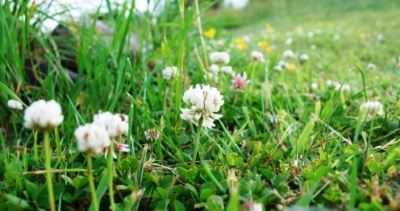
This plant grows commonly in lawns and fields. Early in the year only its leaves are obvious. These are described as trefoil leaves - three leaflets from one stem. These trefoil leaves are easy to find and to recognise. Each leaflet is heart shaped with a pale V-shaped mark. The Irish word for clover is seamair. In spring when there are no flowers out yet, the leaves are young clover - seamair óg or shamrock.

There is a tradition that St Patrick used the leaf of the shamrock to illustrate his teachings about the Holy Trinity to the Irish people long ago. Just as there were three leaflets united in one leaf of the shamrock - so were the three deities of the holy trinity united as one God. To commemorate this, Irish people wear a bunch of shamrock in their lapels on March 17th - St Patrick’s Day.

The plant begins to flower in April and there are white clover flowers all summer long until the end of September. The white clover flower head is actually a cluster of small individual flower heads. The flowers can be visited by honey bees who gather the nectar to make particularly delicious clover honey. As the clover is a member of the pea family, its seeds are carried in pods.

Clover was planted by farmers in their pastures to improve the fertility of the soil. Plants need nitrogen in order to grow and usually, to get a good crop, the farmer must add nitrogen as a fertiliser to the soil. All members of the pea family - including the clovers - are able to take in the nitrogen from the air and use it to grow. They are able to fix nitrogen in this way because they have special nodules on their roots. These nodules are formed because the plant can form an association with a particular type of nitrogen-fixing bacteria and together the plant and bacteria work in a symbiotic relationship to fix nitrogen from the air. Thus, in the days before farmers had large quantities of cattle slurry to restore the nitrogen levels in their soil, they were very glad to plant clover and let it improve the nutrient quality of their soil.

Things to do with Senior Infants
1.    Around St Patrick’s Day, the class can be brought out to collect shamrock from the school lawn or field. They can be told about the tradition of St Patrick and the shamrock.
2.    In May or June the class can go out to look for clover in flower. White clover has obvious white flower heads. Pupils may also find red clover which has purple flowers which are larger than those of the white clover. They may also find small yellow clover flowers. These belong to a different species - yellow clover - which grows in the drier parts of grassland areas.

Around Kilkenny Castle

Natural environments (Geography), Human environments (Geography), Story (History), Local studies (History), Early people and ancient stories (History), Life, society, work and culture in the past (History), Eras of change and conflict (History), Politics, conflict and society (History), Continuity and change over time (History) History, Geography

Through using the resources below, and undertaking a trail around Kilkenny Castle, the children should learn about:
1.     The people associated with Kilkenny Castle – the Butler family and the servants.
2.     Certain design features of the castle, such as limestone, moat, sally port, arrow
3.     loop windows, servants’ entrance, coat of arms and lead hoppers.
4.     The strategic site that the castle is built on.
5.     How the building is changed and why. How the defensive character of the castle became less important as time went by.

Skills and concepts development:
Children should be able to:

1. Time and Chronology:

  • Describe events as before/after/, later/earlier
  • Use a simple timeline
  • Use dates such as 1681

2. Change and continuity:

  • Recognise how the castle has changed at different periods
  • Identify features that have remained the same

3. Cause and effect:

  • Recognise the link between the site of the castle and the need for the lord and soldiers to defend themselves in the early centuries of the castle.
  • The importance of displaying a coat of arms for a family.
  • Recognising how people’s needs change and the impact that has on a building, for example the moat being filled in and the change in the design of the windows.

4. Using evidence:

  • Visiting and examining the building

5. Empathy:

  • Imagine and discuss the feelings of the servants working in the castle.

Methodologies:
Among the methods which may be used are:

  • Story lesson about the Butler family
  • Comparing a modern photo of the entrance to Kilkenny Castle with an 18th century
  • painting
  • Exploring the environment, using the trail
  • Integration with other subjects: geography (limestone), art (designing coats of arms), maths (shape)

Sources Used:

  • John Bradley, Kilkenny, historic town atlas no. 10 (Dublin, 2000)
  • John Bradley, Discover Kilkenny (Dublin, 2000)
  • Katherine Lanigan and Gerald Taylor (eds) Kilkenny, its architecture and history (Kilkenny, 1977)
  • William Neely, Kilkenny, an urban history, 1391-1843 (Belfast, 1989)
  • William Carrigan The History and antiquities of the diocese of Ossory (Dublin, 1905)
  • David Edwards, The Ormond lordship in County Kilkenny 1515-1642 (Dublin, 2003)
  • Oral testimony of Castle Park constable, Liam Burke (3/08/2007)

Woodlice (All About)

Environmental awareness and care (Geography/Science), Living things (Science) Science

Woodlice are very common creatures found in gardens and school grounds. All you have to do is turn over a stone or a flower pot or look under dead leaves and a colony of woodlice will be uncovered. They are not insects — they are members of the group Crustaceae and are related to crabs and lobsters. Insects all have six legs but the woodlouse’s body is made up of seven segments with a pair of legs on each segment — giving it fourteen legs in all. Their bodies are different to those of insects too and will dry out if exposed to light for too long. So woodlice come out at night and hide away during the day to avoid drying out.

Woodlice feed on dead plant material such as dead leaves, rotten wood and dead plant roots. They play a very important role in the food chain as the nutrients locked in the plants are broken down and released by their activities. This is why they are so abundant in the leaf litter at the bottom of a hedge or in woodland. They in turn are part of the food chain, being eaten by spiders, pygmy shrews, hedgehogs and any bird sharp-eyed enough to see them. We have over 20 different species of woodlouse in Ireland — one called the pill bug is able to roll itself into a sphere when disturbed and this helps it to evade capture.

Things to do
1.    Do woodlice prefer light or darkness?
Get a shoebox. Have half the box covered with a lid. Put six of the woodlice into this box. Have a second similar shoebox with no lid as a control to show that you are doing a fair test, and put the other six in there. Come back later and observe where the woodlice are. They will all be in the shady side of the box.
2.    Do woodlice prefer damp or dry?
You can set up a similar experiment with the two boxes only this time no lids on either but a damp sponge in one section of one of the boxes and a dry sponge in a different section. Put two dry sponges in the second box. Put six woodlice in each and observe what happens. Are there more woodlice at the damp sponge than at the dry sponge?