
Hazel (All About)
The hazel tree is the tree of wisdom. It is a native Irish tree and grows particularly in limestone soils. It is a low tree with a trunk consisting of many stems. Very early in the year, in February and March, before the leaves come on the tree, the catkins appear on the twigs. These are the flowers of the tree and they are wind-pollinated. There are two sorts of catkins. The male ones are long and pendulous and contain lots of pollen. The pollen is blown by the wind to the female catkins which have no stalks and are very small and budlike.
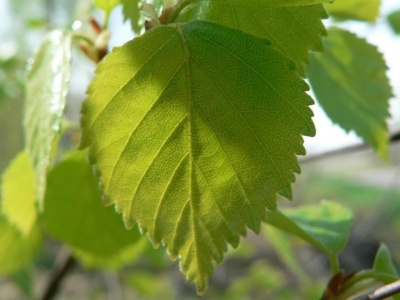
Read moreRead lessThe leaves burst open in April and are particularly soft and downy. In August, the hazel nuts are formed and they are ripe by early September. They are a great source of food for a variety of animals and birds such as squirrels, mice, jays and rooks. Squirrels hide them away to eat later on in winter, but if any are dropped they will germinate into new hazel trees.
Tradition has it that the hazel is the tree of wisdom and that the Salmon of Knowledge got his wisdom from eating the nuts that fell into the water from the hazel trees that grew on the banks of the River Boyne. Certainly, the hazel tree was one of the most useful trees for householders long ago. Apart from eating the nuts as food, they used small forked branches — known as scoilbs — to hold down the thatch on a roof.
These would have to be repaired from time to time hence the seanfhocail “ní hé lá na gaoithe lá na scoilbe”. Larger forked branches are used to this day to divine water. The straight poles formed by the many stemmed trunks were very valuable for building walls, they were woven together and plastered with clay plaster — clay and wattle walls. To be sure of a continual supply of such hazel rods, the trees were coppiced — which means cut across the stems so that new poles would grow. In such a way, the life of a hazel wood could be prolonged indefinitely.
Things to do
1. Find a hazel tree in the vicinity of the school which can be studied throughout the year — catkins, leaves, nuts, buds, bark etc. If there are no hazel trees, one should be acquired for the school grounds and planted and cared for.