
Holly (All About)
Latin name: Ilex aquifolium
Irish name: Cuileann
You’ll find worksheets, illustrations and outdoor activity ideas all about Holly below!
Read moreRead lessThe Irish name for Holly is often found in Irish place names such as Moycullen – the plain of the holly, Glencullen – the glen of the holly, Kilcullen – the church of the holly. Holly is a native evergreen tree. It has broad leaves unlike coniferous evergreen trees such as pine trees. It grows naturally as an under layer in an oak woodland. Its dark green leaves can tolerate the lower light levels here. When the oak canopy trees have lost their leaves from the end of October to the end of April, there is plenty of light in the woodland for the holly to grow.
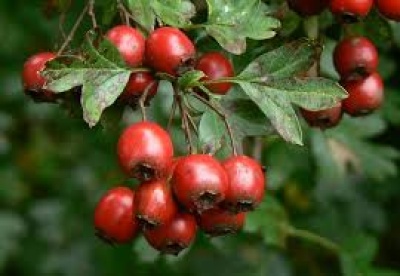
Holly is unusual among Irish trees in that there are male trees and female trees. The female trees have berries and the male trees produce pollen on special male-only flowers. The pollen is blown by the wind to the female trees whose flowers only contain female parts. When these are fertilised by the pollen, berries are then formed which turn red in the autumn. These berries contain a hard stone which is the seed.
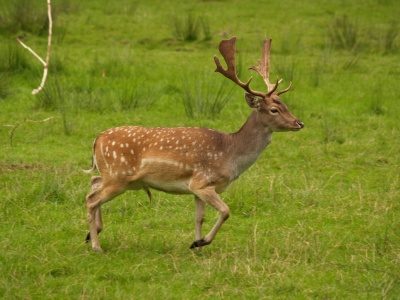
Thrushes, in particular, are very fond of holly berries and will guard 'their' tree against all invaders. They swallow the berries whole and excrete the hard stones in their droppings, from which new holly trees grow. Holly has prickly leaves on its lower branches only. If you look higher up in the tree you will notice that the leaves have fewer and then no prickles on the leaves. The prickles are a defence against being eaten by browsing animals such as deer and when the branches are high enough to be out of the reach of foraging deer there is no longer any need for prickles.
In early Irish law the most valuable tree species were called 'the nobles of the wood' and there were severe fines for cutting them down or destroying them. There were seven noble trees - holly was one of them because its young, soft leaves were used as fodder for animals and its hard timber was used for spears and chariot poles. The word holly in English comes from holy, as the red berries were thought to symbolise drops of Christ’s blood.
However, the tradition of bringing holly into the house at Christmas goes back much earlier than Christian times. They were the only trees in leaf in winter in the deciduous forests of old in Ireland and therefore symbolised life and the sun. So, just after midwinter on December 22nd when the sun began to move back up in the sky, holly was brought into the house to celebrate and to keep away evil spirits.
Outdoor Activity Idea for Senior Infants
Plant a Holly Tree:
Bring the class out to look at a holly tree - particularly in autumn when there may be berries on it. Collect berries to grow into holly trees. Collect the berries when they are red in October. Remove the flesh and wash the stones. Mix them with 3 or 4 times their volume of 50/50 sand and peat and put into a flower pot with drainage holes. These are left outside for 18 months or two winters - before they germinate. They can then be planted in separate pots until they are big enough to go into the ground.