Teachers' Resources | Heritage in Schools

Teachers' Resources

Teach your pupils how to build a giant nest, create a butterfly garden or make their own family tree!

The resources provided here have been submitted by Heritage Experts, teachers or prepared by other educational organisations. The resources are both fun and educational and are designed to inspire and develop an appreciation and curiosity about Ireland’s wonderful natural and cultural heritage.

Resources can be searched for under the following categories:

All

All-Ireland Pollinator Plan - Junior version

Natural environments (Geography), Environmental awareness and care (Geography/Science), Living things (Science) Science

How Can Schools Help Pollinators?

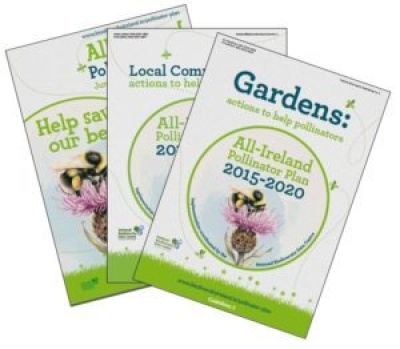
In 2015 bee experts in Ireland came together to produce the All-Ireland Pollinator Plan 2015-2020. We did this because our pollinators, especially our bees, are in big trouble. We need bees to grow our fruit and veg, and to make sure our countryside has lots of beautiful wildflowers. Now we need your help to make Ireland a better place for bees and other pollinators. We need you to tell everyone how important bees are. We also need you to make your school and garden a safe place for bees to live.

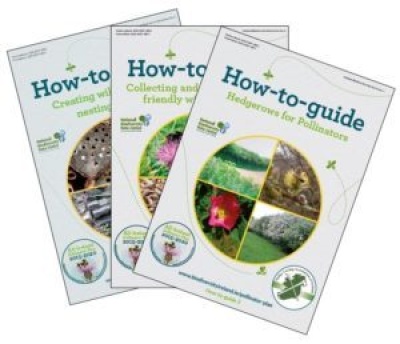
Visit the website of the National Biodiversity Data Centre for more information and guidelines on what schools can do to help pollinators http://www.biodiversityireland...

The Living Classroom

Natural environments (Geography), Environmental awareness and care (Geography/Science), Living things (Science) Science, Geography

The Living Classroom is a huge educational resource for schools linking in with 70% of the curriculum.

A school garden is a great addition to your school. Children learn and have fun in a natural ever-changing environment where they get to appreciate nature, nutrition, and even how maths, reading, geography and history can be fun and how they fit into and influence our day to day lives. They get to learn in a new and exciting way.

Visit http://www.schoolearthed.ie/li... for a range of ideas, resources and links relating to the school garden.

Aistear Guidelines for Good Practice Play

Guideline Research and Policy

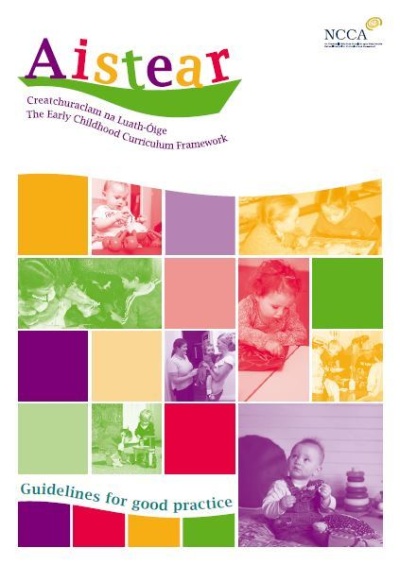
Aistear is the curriculum framework for children from birth to six years in Ireland. It describes learning and development through the four interconnected themes of Well-being, Identity and Belonging, Communicating, and Exploring and Thinking. Chapter 3 – ‘Learning & Developing through Play’ outlines how play relates to these themes and how best to facilitate play among young children.

Archaeology Lesson Plans

Local studies (History), Early people and ancient stories (History), Life, society, work and culture in the past (History), Eras of change and conflict (History), Politics, conflict and society (History), Continuity and change over time (History) History

Would you like your class to learn more about their heritage, and Kilkenny's archaeology, in a fun and education-centred way? The Heritage Office of Kilkenny County Council has developed a series of four lesson plans focused on teaching archaeology to young children! The plans are aimed at pre-school, junior and senior infant classes. They are linked to the primary school curriculum and the Aistear curriculum.

This project was developed in partnership with the Kilkenny County Childcare Committee, Kilkenny Education Centre, Dig-it-Kids, and with co-funding from the Heritage Council.

Around Kilkenny Castle

Natural environments (Geography), Human environments (Geography), Story (History), Local studies (History), Early people and ancient stories (History), Life, society, work and culture in the past (History), Eras of change and conflict (History), Politics, conflict and society (History), Continuity and change over time (History) History, Geography

Through using the resources below, and undertaking a trail around Kilkenny Castle, the children should learn about:
1.     The people associated with Kilkenny Castle – the Butler family and the servants.
2.     Certain design features of the castle, such as limestone, moat, sally port, arrow
3.     loop windows, servants’ entrance, coat of arms and lead hoppers.
4.     The strategic site that the castle is built on.
5.     How the building is changed and why. How the defensive character of the castle became less important as time went by.

Skills and concepts development:
Children should be able to:

1. Time and Chronology:

  • Describe events as before/after/, later/earlier
  • Use a simple timeline
  • Use dates such as 1681

2. Change and continuity:

  • Recognise how the castle has changed at different periods
  • Identify features that have remained the same

3. Cause and effect:

  • Recognise the link between the site of the castle and the need for the lord and soldiers to defend themselves in the early centuries of the castle.
  • The importance of displaying a coat of arms for a family.
  • Recognising how people’s needs change and the impact that has on a building, for example the moat being filled in and the change in the design of the windows.

4. Using evidence:

  • Visiting and examining the building

5. Empathy:

  • Imagine and discuss the feelings of the servants working in the castle.

Methodologies:
Among the methods which may be used are:

  • Story lesson about the Butler family
  • Comparing a modern photo of the entrance to Kilkenny Castle with an 18th century
  • painting
  • Exploring the environment, using the trail
  • Integration with other subjects: geography (limestone), art (designing coats of arms), maths (shape)

Sources Used:

  • John Bradley, Kilkenny, historic town atlas no. 10 (Dublin, 2000)
  • John Bradley, Discover Kilkenny (Dublin, 2000)
  • Katherine Lanigan and Gerald Taylor (eds) Kilkenny, its architecture and history (Kilkenny, 1977)
  • William Neely, Kilkenny, an urban history, 1391-1843 (Belfast, 1989)
  • William Carrigan The History and antiquities of the diocese of Ossory (Dublin, 1905)
  • David Edwards, The Ormond lordship in County Kilkenny 1515-1642 (Dublin, 2003)
  • Oral testimony of Castle Park constable, Liam Burke (3/08/2007)

Ash (All About)

Environmental awareness and care (Geography/Science), Living things (Science) Science

Saint Patrick is said to have driven the snakes out of Ireland with an ash stick, and the ash tree has had a special place in Ireland ever since. Whether or not this story is true, it is certainly true that hurlies are made from ash and these definitely have a special Irish significance, ever since Setanta drove a ball down the throat of Culann’s hound with one and had to replace him himself, thus acquiring the name Cúchulainn!

Ash is a canopy tree which can grow very tall, it once formed great woodlands together with elm on good limestone soil in Ireland long ago. These woodlands were cleared for agriculture over the centuries and the ash is now mainly found as a hedgerow tree and as a tall tree in parks in cities and towns. It is the very last tree to get its leaves, usually waiting until the month of May for the characteristic black buds to open.

The leaves are compound leaves with up to thirteen leaflets on each leaf. The flowers are wind-pollinated so these appear from the flower buds in early April before the leaves appear. The pollen can thus be dispersed by the wind without being hindered by leaves. The seeds are known as keys. They occur in bunches on the tree, remain there long after the leaves have fallen and as they each have a ‘wing’ they are dispersed by the wind.

Ash is a native species that supports 41 different insect species. A good way to examine these is to shake a well-leaved bough in mid June or in early September into an upturned umbrella and see what emerges. In ancient Irish tradition, the ash was a very valued tree and was considered to be one of the seven nobles of the woods as its valuable timber could be used for building, and making furniture.

Things to do

1.  Find an ash tree near to the school and bring the class out to see it in each of the four seasons. In spring they can make a drawing of the twigs with black buds. In April they can find one with flowers open. In May they can note the date when the large terminal bud opens revealing the leaves.

By the end of May they should be able to add a drawing of the leaf to their account of the ash tree. In September they can observe the seeds. These can be planted immediately and some of them at least will germinate the following spring. In winter they can make a bark rubbing with paper and a soft pencil. Mature ash trees have a very rough bark.

A Mini-Dig

Local studies (History), Early people and ancient stories (History), Life, society, work and culture in the past (History), Continuity and change over time (History) History

Explore the past, the hands-on way! Archaeologists are scientists and historians who spend much of their time on their hands and knees, carefully digging through layers of earth to discover the past. What they find not only reflects the past, but also helps us to understand the present and to anticipate the future.

Things to do
1.    Create a mini-dig 1 - Find the treasure!
2.    Find a big box and fill it with loose soil or sand and place loose coins and artefacts (brooches, pins, and arrow heads) for the children to dig or find in the box. Discuss where and where the items came from.
3.    Create a mini-dig 2 - What’s the person’s job?
4.    Fill a big box with loose soil or sand and place articles that relate to a person's job in it for the children to find.

A Guide for Schools on Climate Action UNESCO

Guideline, Natural environments (Geography), Human environments (Geography), Environmental awareness and care (Geography/Science), Energy and forces (Science) Science, Geography, Research and Policy

Does your school want to help create a healthier, fairer, more environmentally sustainable society? Do you want to empower children and young people to do the same? Do you want to make your school more climate-friendly? If so, this guide is for you!

The guide is organised in four parts. Part 1 explains why you and your school should take on a whole-school approach to climate action. Part 2 outlines how your school can plan, put into practice, and evaluate your own strategies and visions for reducing climate change. Part 3 provides six guidelines that suggest how to concretely include climate action in your school governance, teaching and learning, campus and facility management, and partnerships with the community. The guidelines are accompanied by examples showing how schools around the world are taking action. At the end of the guide, in Part 4, you will find a table to help you monitor action in the thematic areas along the six guidelines.