Teachers' Resources | Heritage in Schools

Teachers' Resources

Teach your pupils how to build a giant nest, create a butterfly garden or make their own family tree!

The resources provided here have been submitted by Heritage Experts, teachers or prepared by other educational organisations. The resources are both fun and educational and are designed to inspire and develop an appreciation and curiosity about Ireland’s wonderful natural and cultural heritage.

Resources can be searched for under the following categories:

Geography

Eco Rangers - discover nature and biodiversity

Science, Geography

It’s time to get out of the classroom with the Eco Ranger’s school programme and use active learning with your pupils to discover, learn and connect with nature. Once you’ve registered for Eco Ranger’s offline and have received your confirmation, you can go ahead and register here on the website https://www.ecorangers.ie/.

Nature and biodiversity is something that Bord na Móna is investing in as part of our day to day work. This is why Bord na Móna created Eco Rangers- Guardians of the Land an initiative for schools that gets children outdoors and connecting with nature and learning about the importance of protecting it. See more at https://www.ecorangers.ie/.

The Living Classroom

Science, Geography

The Living Classroom is a huge educational resource for schools linking in with 70% of the curriculum.

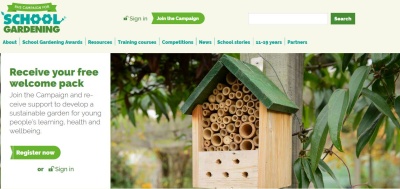
A school garden is a great addition to your school. Children learn and have fun in a natural ever-changing environment where they get to appreciate nature, nutrition, and even how maths, reading, geography and history can be fun and how they fit into and influence our day to day lives. They get to learn in a new and exciting way.

Visit http://www.schoolearthed.ie/li... for a range of ideas, resources and links relating to the school garden.

Nature Detectives by the Woodland Trust UK

Science, Geography

Build a giant nest, go on a mini beast safari, interview a tree, be a nature reporter, make mud pies and even investigate animal poo!

Visit the Woodland Trust’s ‘Nature Detective’ website for lots of imaginative things to build, create and discover in the outdoors. Great ideas for kids, but lots of fun for grown-ups too!

Organic Gardening for Primary Schools DVD

Science, Geography

This DVD shows teachers and pupils how to plan, build, develop and maintain a school garden using organic principles. Along with the DVD disc, the pack contains 24 Worksheets/Bileoga Oibre to complement the video as well as a comprehensive document showing the curriculum linkages. The content is in English and in Irish and available free of charge to all Primary Schools.

Available from Bord Bia

Produced by By Kerry Earth Education Project for Bord Bia.

SEED - School Earth Education

Science, Geography

SEED is a national network of educational centres with many years experience in Primary and Post Primary environmental education, specialising in all aspects of organic school gardening.

SEED's aims are to establish living classrooms in every school to demonstrate that school gardens have unlimited cross curricular potential, particularly tying in with SESE, SPHE, Art, Languages, History and Maths.

Heritage Maps

Science, History, Geography

Find or identify heritage sites and explore heritage data sets anywhere in Ireland.

Ireland’s most comprehensive heritage resource, HeritageMaps.ie enables you locate a vast range of heritage-related sites and projects.

The HeritageMaps.ie viewer provides access to national heritage data sets in map form while incorporating additional contextual data from a wide range of online sources.

Where We Live

Geography

Encourage the children to engage with the landscape of the surrounding areas, the land and layout of their area and how it can change with new building works.

Things To do
1.    Download the Where We Live worksheet below and ask the children to draw a map of their trip to school, showing the major landmarks on their way.
2.    Bring the children to the local park and point out the little hills and mounds that make up that landscape and ask them to draw a picture of the park.

The Tree Council Of Ireland

Science, Geography

Lots of information and worksheets about trees for all class groups are provided on this website. Learn about photosynthesis, different types of trees and try to grow your own!

The River Nore

Science, History, Geography

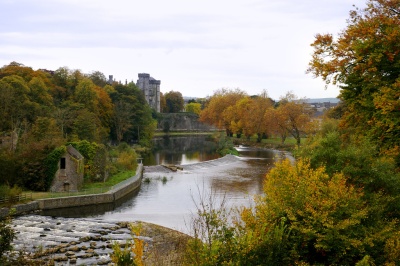
The Heritage Office of Kilkenny County Council has developed eight lesson plans, which will be useful for teachers of 4th, 5th and 6th class groups, on aspects of the River Nore's heritage. They are designed to be used in conjunction with the ‘Explore the Nore’ poster (downloadable below).

The river Nore (An Fheoir) rises in the Devil’s Bit Mountain in Co. Tipperary. It then flows through County Laois and enters County Kilkenny at the townland of Ballynaslee. It flows through Co. Kilkenny, before flowing into the River Barrow a few kilometres north of New Ross. 

It is known as one of the Three Sisters Rivers (Barrow, Nore, Suir). The River Nore is 140km in length and drains an area of approximately 861 hectares. It has a very steep gradient, but this is lessened by the many weirs built along its length.

This project is kindly supported by the Kilkenny Education Centre and the Heritage Council.

The Irish Wildlife Trust

Science, Geography

The Wildlife Trust has lots of education initiatives that will keep primary school pupils engaged with the outdoors. It also provides programmes such as the Wild for Nature and Badger Schools for schools to become involved with on an ongoing basis.

The 1947 Flood, Kilkenny

Science, History, Geography

Content of the study
Children should learn about:
1.    The cause and effect of the flood.
2.    The River Nore and how it has changed from the time of the flood.
3.    The story of the flood as told in the Kilkenny People.
4.    Memories of people about the 1947 flood.

Skills and concepts development
Children should be able to:
1.    Time and Chronology:

  • Describe events as before/after/ later/earlier
  • Use a simple timeline

2.    Change and continuity:

  • Identify features that have remained the same, for example the houses and the bridges near the river
  • Identify how the River Nore has changed

3.    Cause and effect:

  • Examine the reasons for the flood and the effect it had on Kilkenny City

4.    Using evidence:

  • Photographs of the river today
  • Photographs of the flood
  • Edited version of articles in the Kilkenny People

5.    Synthesis and Communication:

  • Communicate an awareness of the story of the flood and stories associated with it, in a variety of different ways such as drama and art.

5.    Empathy:

  • Imagine and discuss what it was like to be rescued in a boat on the evening of the flood.
  • Imagine and discuss what it was like to have your home destroyed by floodwater.

Methodologies

  • Among the methods which may be used are:
  • A story lesson based on the accounts from the Kilkenny People
  • Examining a photograph taken of the flood
  • Listening to personal memories of the flood (oral evidence)
  • Integration with other subjects: the river (Geography)

Assessment

  • Teacher observation
  • Outcomes of pupil-pupil and teacher-pupil discussion
  • Teacher-designed tasks
  • Work cards designed to help children examine the evidence

Skellig Michael

Science, Geography

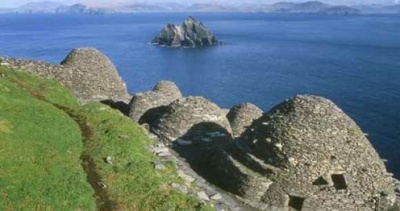
Skellig Michael, comprising a well-preserved monastery and a remote hermitage perched on a rock in the Atlantic, is the most spectacularly situated of all the early medieval Irish monastic sites. The island’s isolation has helped to preserve and protect the monastic remains, allowing the visitor to marvel at the remarkable achievements of the monks.

Skellig Michael is also an internationally renowned site for breeding seabirds with its steep rock slopes and cliffs providing nesting places for a variety of seabirds. It is this combination of cultural and natural history which imbues the island with a strong sense of beauty and spirituality. When inscribing the site on the World Heritage List in 1996 UNESCO described Skellig Michael as a unique example of early religious settlement which illustrates, as no other site can, the extremes of Christian monasticism.

School Garden

Science, Geography

Lots of easy to understand information on planting, sowing and soil preparation for kids, and some great ideas for garden-related craft.

The Salty Sea

Science, Geography

Water, water everywhere and not a drop to drink! Explaining sea water.

Things To do
1.    Explain the difference between fresh water and sea water. And try some of these experiments.
How do we know that there is salt in the sea water?
You will need:

  • bowl
  • 480 ml ocean or sea water (You can make your own by mixing 10 ml of salt with 480ml of water)

Directions:

  • Pour the water into a pan.
  • Place the pan in a warm, dry place.
  • Allow water to evaporate—this usually takes a few days.
  • Make observations.

2.    Is it easier to float in the ocean or in fresh water?

You will need:

  • 1 uncooked egg
  • 1 jar filled with fresh water
  • 1 jar filled with sea water

Directions:

  • Put the egg in the jar of fresh water.
  • Observe what happens.
  • Put the egg in the jar of ocean

Outdoor Pocket Guides

Science, Geography

These fun and colourful pocket guides are great for kids to bring with them when out and about in nature. Titles include Have Fun with Fungi, Sow Some Wild Flowers and Tune into the Dawn Chorus. 

Our Wetlands Heritage

Science, Geography

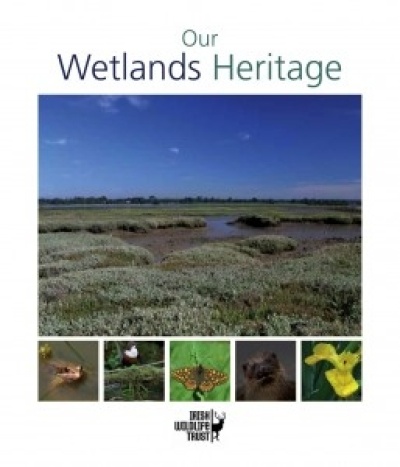
This booklet explores Ireland's wetland wildlife - everything from dragonflies, butterflies, frogs and newts to wetland birds, right up to our largest carnivore - the otter.

It also the ecosystems that wetlands provide, the associated threats and measures to ensure wetland protection for the future.

Make A Concertina Book

Science, History, Geography

This book is quick and easy to make, yet still offers flexibility and potential for children to create their own unique versions. They can be used for everything from storytelling to making guidebooks about a local wood or museum, what they put into your book is up to you!

Kilkenny Water

Science, History, Geography

The city of Kilkenny is built on the River Nore. The name 'Nore' in Irish is An Fheoir, which probably means the boundary. The river rises far to the north in the Slieve Bloom Mountains between counties Laois and Offaly. The monastery, cathedral and small town which existed before the Norman invasion was built on the west bank of the river. Today the Nore is crossed by three bridges – Green’s Bridge, John’s Bridge and Ossory Bridge.

Download the resources below to explore the history, science and geography relating to Kilkenny’s water.

Coilte Trees

Science, Geography

Coillte, Ireland’s leading forestry company, welcomes you to the huge range of recreation opportunities they provide at many of their sites across the country. You can access miles of walking, hiking, multi access, and long distance trails, enjoy the thrill of cycling new world class bike trails, fish, picnic, watch wildlife, launch your canoe on the rivers, visit megalithic sites or just sit and enjoy the outdoors. The choice is yours.

Things to do
1.    Visit a local forest - you can find a list of forests and trails in your area here.
2.    Here you can download information and worksheets about trees. These worksheets are suitable for primary school children and are a fun way for children to learn about trees and the environment. Learn more about trees here.

Coilte Outdoors

Science, Geography

The Coilte website provides a full list of recreational Coilte sites that you can visit with your pupils, plus helpful tips for enjoying and respecting the natural environment.

Around Kilkenny Castle

History, Geography

Through using the resources below, and undertaking a trail around Kilkenny Castle, the children should learn about:
1.     The people associated with Kilkenny Castle – the Butler family and the servants.
2.     Certain design features of the castle, such as limestone, moat, sally port, arrow
3.     loop windows, servants’ entrance, coat of arms and lead hoppers.
4.     The strategic site that the castle is built on.
5.     How the building is changed and why. How the defensive character of the castle became less important as time went by.

Skills and concepts development:
Children should be able to:

1. Time and Chronology:

  • Describe events as before/after/, later/earlier
  • Use a simple timeline
  • Use dates such as 1681

2. Change and continuity:

  • Recognise how the castle has changed at different periods
  • Identify features that have remained the same

3. Cause and effect:

  • Recognise the link between the site of the castle and the need for the lord and soldiers to defend themselves in the early centuries of the castle.
  • The importance of displaying a coat of arms for a family.
  • Recognising how people’s needs change and the impact that has on a building, for example the moat being filled in and the change in the design of the windows.

4. Using evidence:

  • Visiting and examining the building

5. Empathy:

  • Imagine and discuss the feelings of the servants working in the castle.

Methodologies:
Among the methods which may be used are:

  • Story lesson about the Butler family
  • Comparing a modern photo of the entrance to Kilkenny Castle with an 18th century
  • painting
  • Exploring the environment, using the trail
  • Integration with other subjects: geography (limestone), art (designing coats of arms), maths (shape)

Sources Used:

  • John Bradley, Kilkenny, historic town atlas no. 10 (Dublin, 2000)
  • John Bradley, Discover Kilkenny (Dublin, 2000)
  • Katherine Lanigan and Gerald Taylor (eds) Kilkenny, its architecture and history (Kilkenny, 1977)
  • William Neely, Kilkenny, an urban history, 1391-1843 (Belfast, 1989)
  • William Carrigan The History and antiquities of the diocese of Ossory (Dublin, 1905)
  • David Edwards, The Ormond lordship in County Kilkenny 1515-1642 (Dublin, 2003)
  • Oral testimony of Castle Park constable, Liam Burke (3/08/2007)

A Guide for Schools on Climate Action UNESCO

Science, Geography, Research and Policy

Does your school want to help create a healthier, fairer, more environmentally sustainable society? Do you want to empower children and young people to do the same? Do you want to make your school more climate-friendly? If so, this guide is for you!

The guide is organised in four parts. Part 1 explains why you and your school should take on a whole-school approach to climate action. Part 2 outlines how your school can plan, put into practice, and evaluate your own strategies and visions for reducing climate change. Part 3 provides six guidelines that suggest how to concretely include climate action in your school governance, teaching and learning, campus and facility management, and partnerships with the community. The guidelines are accompanied by examples showing how schools around the world are taking action. At the end of the guide, in Part 4, you will find a table to help you monitor action in the thematic areas along the six guidelines.

Biodiversity Quiz!

Science, Geography

Put together by our Heritage Expert, Geoff Hunt, this great little 15-minute quiz gets the pupils out and about in the school grounds looking at the flowers, trees, animals and insects! Once they're back in the classroom, they can take this quiz to see what they spotted!

Nature's Calendar

Science, Geography

Nature’s Calendar is an independent website dedicated to people in Ireland interested in the influence of our weather and climate on plants, animals and on our ecosystems. The site allows users to log their sightings of plants and animals at different times of the year - therefore tracing the change in the seasons!