Grow A Tree
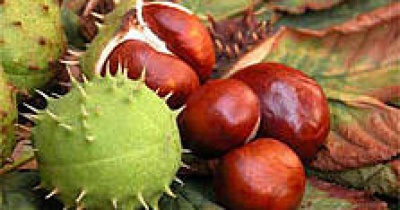
Simple and straightforward directions for growing your own tree from a seed!
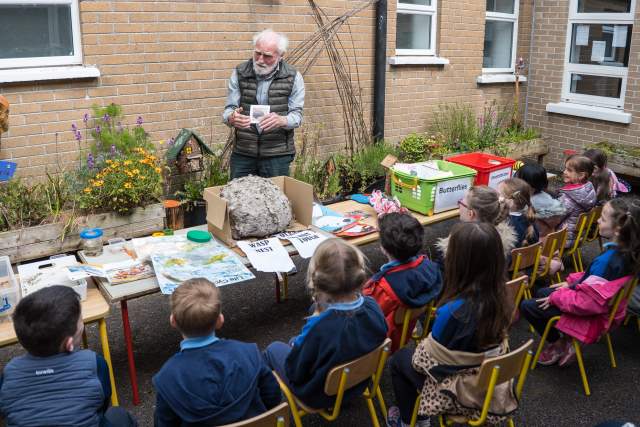
Múin do do dhaltaí conas nead ollmhór a thógáil, conas gairdín féileacán a chruthú nó conas a gcraobh ghinealaigh féin a dhéanamh!
Maidir leis na hacmhainní atá á soláthar anseo, Saineolaithe Oidhreachta nó múinteoirí a chuir ar fáil iad nó eagraíochtaí eile oideachais a d’ullmhaigh iad. Acmhainní de chineál spraoi agus oideachais araon atá ann agus tá siad ceaptha chun tuiscint agus fiosracht a spreagadh agus a fhorbairt maidir le hoidhreacht iontach nádúrtha agus cultúir na hÉireann.
Is féidir acmhainní a chuardach faoi na catagóirí seo a leanas:
Simple and straightforward directions for growing your own tree from a seed!
A symposium with leading international and national experts in place-based education took place in August 2012 in Kinvara, Co. Galway. This unique event brought together thinkers and practitioners who specialise in the theme of place-based learning, which encourages the use of the local environment as a learning resource. Feedback from organisers, speakers and attendees is available to listen to on Sound Cloud.
A great genealogy website with games, ideas and resources, suitable for a range of age groups. Activities include a family history scavenger hunt and creating a time capsule.
Comedy and science collide as host, Neil Delamere puts team captains, PJ Gallagher and Dr Aoibhinn Ní Shúilleabháin and their teams of comedians and science personalities through their paces, in this original science-comedy quiz.
TuilleadhLeigh níos lúEach show sees host Neil Delamere risk life and limb to celebrate the greatest ‘Eureka Moments’ of our time – he channels 4 million volts of electricity and shoots lightning out of his fingertips (and a couple of other places while he’s at it), he creates an earthquake in Westmeath, undergoes astronaut training in a human centrifuge and goes freediving in a freezing quarry – all in the name of science.
Eureka! The Big Bang Query was made with the support of Science Foundation Ireland and the Broadcasting Authority of Ireland.
This BBC resource has lots of interesting facts and information about flowers and fun ideas for related activities, including how to dissect a flower!
A quick activity that can offer delightful characters to use in building stories, having adventures or unfolding the life of an old building.
This is a good technique for collecting ideas and experiences gradually, perhaps over the course of a workshop or several workshops. It is ideal for collating a series of activities, each one generating a different page and it's easy to add more pages later and let books continue to grow.
Get the children to recognise what they are eating and were it comes from. Explaining the difference between root and leaf vegetables and the importance of eating their five a day.
TuilleadhLeigh níos lúThings To do
1. Grow Celtic Cress (this will take about 4-5 days).
What you will need:
1. Cress seeds, paper towels and a flat plate.
What to do:
1. Download the Celtic Cress worksheet below and cut out the first initial of the student’s name.
2. Wet some towels until they are soaking.
3. Lay the letter shape onto the towels.
4. Sprinkle lots of cress seeds in the letter shape. Make sure you cover the whole of the letter shape. Press the seeds down gently.
5. Lift the letter shape, leaving the seed shapes. Place the plate in a warm sunny spot.
6. Use a spoon to water around the letter shapes every day. Don’t put water on the seeds.
7. Watch them grow (around 4-5 days). When the cress is as long as your finger, cut it off and eat it!
Not just a pretty face. Flowers can change the world, learn how plants reproduce, and many insects would die without this vital source of nutrients. A flower is the part of the plant that makes the seeds. The main parts of a flower are the carpals and stamens. These parts are often found in the centre of the flower. There are egg cells in the carpel and pollen cells in the stamen. All flowers have four basic parts: sepals, petals, carpals and stamen. Different flowers have different numbers and shapes of these parts.
TuilleadhLeigh níos lúThings To do
1. Download the Flower Parts worksheet below and name the parts of a flower.
2. Grow a plant from seed (this will take about 2 - 3 weeks).
What you will need:
1. A clean glass jar, paper napkins
What to do:
1. Rinse the jar in cold water. Empty it out - but do not dry it.
2. Fold a paper napkin in half, curl it into a circle and slip it inside the jar.
3. Press the napkin against the side of the jar (let it soak up the remaining water residue).
4. Peel back part of the napkin and push three seeds (broad bean seeds are good for this) evenly spaced around the inside of the glass jar.
5. Wet the napkins with lots of water.
6. Put the jar in a bright warm place (the windowsill is perfect!).
7. Add water often to keep the napkins wet.
8. The roots will start to grown first and then the shoots.
Explore buildings of interest and different architectural style around the local neighbourhood, town or village.
TuilleadhLeigh níos lúThings To do
1. Download the Famous Buildings worksheet below and ask the children to name the buildings in the pictures.
2. If possible, take pictures of local landmarks and do a mini 'show-and-tell' about the buildings.
3. Ask the children to draw a picture of a local landmark and do a mini 'show-and-tell'.
This website documents a project in which six County Sligo schools explored and documented the heritage sites of the county. It has lots of resources that can be used by other schools in Sligo.
Coillte, Ireland’s leading forestry company, welcomes you to the huge range of recreation opportunities they provide at many of their sites across the country. You can access miles of walking, hiking, multi access, and long distance trails, enjoy the thrill of cycling new world class bike trails, fish, picnic, watch wildlife, launch your canoe on the rivers, visit megalithic sites or just sit and enjoy the outdoors. The choice is yours.
TuilleadhLeigh níos lúThings to do
1. Visit a local forest - you can find a list of forests and trails in your area here.
2. Here you can download information and worksheets about trees. These worksheets are suitable for primary school children and are a fun way for children to learn about trees and the environment. Learn more about trees here.
The Coilte website provides a full list of recreational Coilte sites that you can visit with your pupils, plus helpful tips for enjoying and respecting the natural environment.
This website has lots of interesting information on the history and heritage of Christchurch Cathedral, Dublin for older age groups.
Use this app to identify Irish Butterflies and report their sighting to the National Biodiversity Data Centre if you wish.
An animated parody of the Da Vinci Code (suitable for younger age groups) which links to an interactive site with lots of information on global warming issues (suitable for older ages).
You’ll find lots of interesting information on bats for older age groups on the Bat Conservation Ireland website. Find out where bats roost, how many different species of bat live in Ireland, how echolocation works and much more.
Help your students learn all about trees through a range of hands-on and enjoyable activities, including useful notes for teachers and children’s activity sheets.
Geoff Hunt, one of our very own Heritage Experts, has some great tips for attracting garden birds to your school grounds. This project has been very successful in other schools and encourages pupils to become familiar with a wide variety of garden birds!
Loughnaneane Park is a free amenity provided by Roscommon County Council which is available to all. This pack aims to promote Loughnaneane Park as an education resource site, to be used by primary schools for field studies relating to natural, built and cultural heritage.
A fun and interactive site which engages children in maths, science and the visual arts through the medium of architecture.
Would you like your class to learn more about their heritage, and Kilkenny's archaeology, in a fun and education-centred way? The Heritage Office of Kilkenny County Council has developed a series of four lesson plans focused on teaching archaeology to young children! The plans are aimed at pre-school, junior and senior infant classes. They are linked to the primary school curriculum and the Aistear curriculum.
TuilleadhLeigh níos lúThis project was developed in partnership with the Kilkenny County Childcare Committee, Kilkenny Education Centre, Dig-it-Kids, and with co-funding from the Heritage Council.
Latin name: Trifolium repens
Irish name: Seamair bán
You’ll find worksheets, illustrations and outdoor activity ideas all about White Clover below!
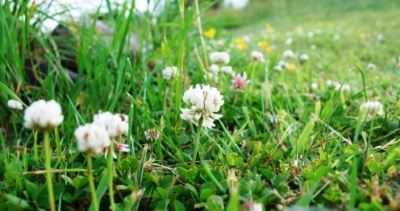
TuilleadhLeigh níos lúThis plant grows commonly in lawns and fields. Early in the year only its leaves are obvious. These are described as trefoil leaves - three leaflets from one stem. These trefoil leaves are easy to find and to recognise. Each leaflet is heart shaped with a pale V-shaped mark. The Irish word for clover is seamair. In spring when there are no flowers out yet, the leaves are young clover - seamair óg or shamrock.
There is a tradition that St Patrick used the leaf of the shamrock to illustrate his teachings about the Holy Trinity to the Irish people long ago. Just as there were three leaflets united in one leaf of the shamrock - so were the three deities of the holy trinity united as one God. To commemorate this, Irish people wear a bunch of shamrock in their lapels on March 17th - St Patrick’s Day.
The plant begins to flower in April and there are white clover flowers all summer long until the end of September. The white clover flower head is actually a cluster of small individual flower heads. The flowers can be visited by honey bees who gather the nectar to make particularly delicious clover honey. As the clover is a member of the pea family, its seeds are carried in pods.
Clover was planted by farmers in their pastures to improve the fertility of the soil. Plants need nitrogen in order to grow and usually, to get a good crop, the farmer must add nitrogen as a fertiliser to the soil. All members of the pea family - including the clovers - are able to take in the nitrogen from the air and use it to grow. They are able to fix nitrogen in this way because they have special nodules on their roots. These nodules are formed because the plant can form an association with a particular type of nitrogen-fixing bacteria and together the plant and bacteria work in a symbiotic relationship to fix nitrogen from the air. Thus, in the days before farmers had large quantities of cattle slurry to restore the nitrogen levels in their soil, they were very glad to plant clover and let it improve the nutrient quality of their soil.
Things to do with Senior Infants
1. Around St Patrick’s Day, the class can be brought out to collect shamrock from the school lawn or field. They can be told about the tradition of St Patrick and the shamrock.
2. In May or June the class can go out to look for clover in flower. White clover has obvious white flower heads. Pupils may also find red clover which has purple flowers which are larger than those of the white clover. They may also find small yellow clover flowers. These belong to a different species - yellow clover - which grows in the drier parts of grassland areas.
Through using the resources below, and undertaking a trail around Kilkenny Castle, the children should learn about:
1. The people associated with Kilkenny Castle – the Butler family and the servants.
2. Certain design features of the castle, such as limestone, moat, sally port, arrow
3. loop windows, servants’ entrance, coat of arms and lead hoppers.
4. The strategic site that the castle is built on.
5. How the building is changed and why. How the defensive character of the castle became less important as time went by.
Skills and concepts development:
Children should be able to:
1. Time and Chronology:
2. Change and continuity:
3. Cause and effect:
4. Using evidence:
5. Empathy:
Methodologies:
Among the methods which may be used are:
Sources Used: