The Grain Chain
Where does our food come from? Use this great website to explain where and how the food gets to our table.
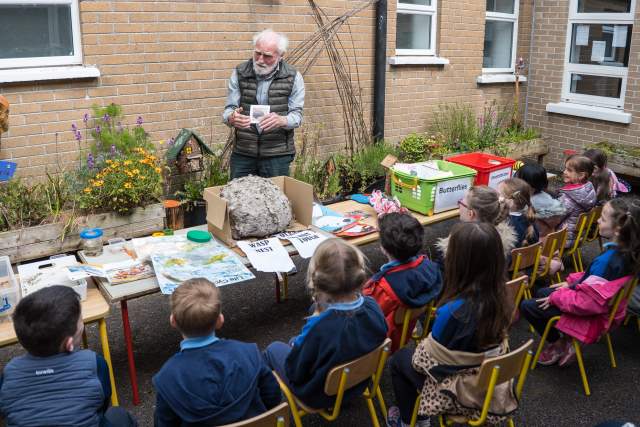
Múin do do dhaltaí conas nead ollmhór a thógáil, conas gairdín féileacán a chruthú nó conas a gcraobh ghinealaigh féin a dhéanamh!
Maidir leis na hacmhainní atá á soláthar anseo, Saineolaithe Oidhreachta nó múinteoirí a chuir ar fáil iad nó eagraíochtaí eile oideachais a d’ullmhaigh iad. Acmhainní de chineál spraoi agus oideachais araon atá ann agus tá siad ceaptha chun tuiscint agus fiosracht a spreagadh agus a fhorbairt maidir le hoidhreacht iontach nádúrtha agus cultúir na hÉireann.
Is féidir acmhainní a chuardach faoi na catagóirí seo a leanas:
Where does our food come from? Use this great website to explain where and how the food gets to our table.
The Frog Blog contains short and snappy science articles on a rich array of topics, from astronomy to zoology. It's created for science enthusiasts of all ages, so enjoy!
This is the most recent national policy document available in relation to children and the outdoors. The objective of this policy is to plan for an increase in public play facilities, thereby improving the quality of life of children living in Ireland by providing them with more play opportunities. The document is an outcome of the National Children’s Strategy, launched in 2000 and is aimed specifically at addressing the needs of younger children.
TuilleadhLeigh níos lúThe policy looks at a range of issues, including: guiding principles; a partnership approach between the statutory, community, voluntary and private sectors; developing a play infrastructure; safety and public liability insurance; and funding arrangements.
This booklet is for parents and carers of young children up to the age of six, although most of the information applies to children of all ages. It highlights the benefits of outdoor play and shows how playing outside supports your child’s development.
Aistear is the curriculum framework for children from birth to six years in Ireland. It describes learning and development through the four interconnected themes of Well-being, Identity and Belonging, Communicating, and Exploring and Thinking. Chapter 3 – ‘Learning & Developing through Play’ outlines how play relates to these themes and how best to facilitate play among young children.
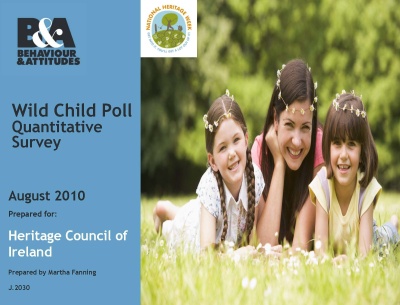
This research, commissioned by Heritage Council, was undertaken in order to understand the types of activities that today's adults undertook as children, and the extent to which their own children undertake the same activities today.
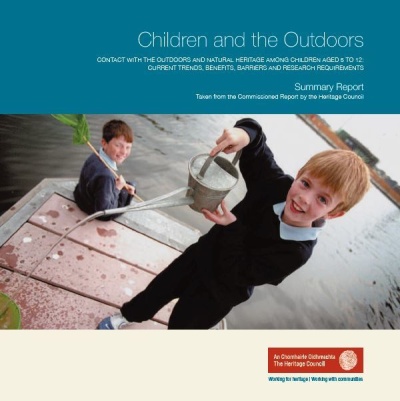
The objective of this research, commissioned by the Heritage Council, was to review existing research and relevant literature around children’s relationship with the outdoors and natural heritage from a children’s rights perspective. This included examining and analysing current trends and identifying gaps in the research on this subject, particularly in the Irish context.
The PDFs below provide a history of local government in Kilkenny, encouraging the children to become familiar with important events in the history of the locality and referring to the wider national context where relevant.
Theobald Fitzwalter, an English nobleman, came with the young Prince John, to Ireland in 1185. The prince gave Fitzwalter a large area of land and the important job of Chief Butler of Ireland. This meant that if the king was visiting Ireland, the Chief Butler had to make sure there was plenty of food and drink ready for him and for the group travelling with him. Download the full PDF below for the full story of the Butler family.
TuilleadhLeigh níos lúThis resource encourages the children to become familiar with important events in the history of the locality, referring to the wider national context where relevant.
An introduction into different types of buildings that are in the locality.
TuilleadhLeigh níos lúThings To do
1. Go on a building ramble. Ask the children to look at the different types of houses that are in their neighbourhood. Do a mini survey of where they live and what kind of house/ apartment they live in.
2. Download the Front Doors worksheet below and draw a picture of four different doors they see on their way to school.
3. Tell the three Little Pigs Story and get the children to draw the three different types of houses.
Content of the study
Children should learn about:
1. The cause and effect of the flood.
2. The River Nore and how it has changed from the time of the flood.
3. The story of the flood as told in the Kilkenny People.
4. Memories of people about the 1947 flood.
Skills and concepts development
Children should be able to:
1. Time and Chronology:
2. Change and continuity:
3. Cause and effect:
4. Using evidence:
5. Synthesis and Communication:
5. Empathy:
Methodologies
Assessment
Shane Casey, the Biodiversity Officer for Clare County Council has provided us with some of his entertaining children's stories inspired by nature!
TuilleadhLeigh níos lúAlfred's Big Adventure is all about the antics of an ant, which takes place in the great expanse of a back garden! It's a great way of engaging younger pupils with what's going on just outside their backdoor.
The Secret Diary is aimed at slightly older children and contains some funny and engaging commentaries on the changing seasons, a really lovely way to engage children with the changes taking place in nature throughout the year.
The Agony 'Ant' is great fun and highly entertaining. Children should get a real kick out of the disgruntled inhabitants of the natural world, including a very upset tree who wants advice on how to rid himself of the nesting 'squatters' on his branches!
Published by Kilkenny Education Centre with support from the Heritage Council, this beautifully illustrated publication provides in-depth knowledge about the medieval city of Kilkenny with its narrow streets, its distinctive townscape and rich historic fabric.
St. Kieran’s Street in Kilkenny is named after St. Kieran's Well and the site of an ancient church at its northern end. In times past it was named Low Lane, Back Lane and King Street. The presentation, walking trail and worksheets below allow the children to discover the rich heritage of the street first hand.
TuilleadhLeigh níos lúThis resource ties in to the strand unit, ‘my locality throughout the ages’, which requires the children to become familiar with important events in the history of the locality, referring to the wider national context where relevant.
Saint Brigid is remembered for her spirituality, charity and compassion. Her feast day is on the 1st February, the first day of spring. It is customary on St Brigid’s Day to make a cross, known as a ‘St Brigid’s Cross’, out of rushes or reeds (other materials may be used if no rushes or reeds are available).
TuilleadhLeigh níos lúOnce the cross is woven, it is blessed with holy water by a priest. It is then hung on the front doors of homes and left in place all year, to be burned and replaced with a newly-woven cross on the next St Brigid’s Day.
How to make a St. Brigid’s Cross
You will need:
Instructions:
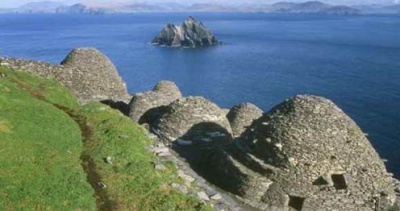
Skellig Michael, comprising a well-preserved monastery and a remote hermitage perched on a rock in the Atlantic, is the most spectacularly situated of all the early medieval Irish monastic sites. The island’s isolation has helped to preserve and protect the monastic remains, allowing the visitor to marvel at the remarkable achievements of the monks.
TuilleadhLeigh níos lúSkellig Michael is also an internationally renowned site for breeding seabirds with its steep rock slopes and cliffs providing nesting places for a variety of seabirds. It is this combination of cultural and natural history which imbues the island with a strong sense of beauty and spirituality. When inscribing the site on the World Heritage List in 1996 UNESCO described Skellig Michael as a unique example of early religious settlement which illustrates, as no other site can, the extremes of Christian monasticism.
Lots of easy to understand information on planting, sowing and soil preparation for kids, and some great ideas for garden-related craft.
Water, water everywhere and not a drop to drink! Explaining sea water.
TuilleadhLeigh níos lúThings To do
1. Explain the difference between fresh water and sea water. And try some of these experiments.
How do we know that there is salt in the sea water?
You will need:
Directions:
2. Is it easier to float in the ocean or in fresh water?
You will need:
Directions:
Roscommon Castle is a dramatic and imposing 13th Century Norman Castle. It was built in 1269 by Robert de Ufford, on lands he had seized from the Augustinian Priory. The castle has a tumultuous past which can be explored with junior level children in the presentation below.
TuilleadhLeigh níos lúToday, the Castle's past can be visited while enjoying adjacent Loughnaneane Park and Playground, a 14 acre recreational area. The natural features of the park include a turlough and a wildlife conservation area which is a habitat of unique flora and fauna.
Image by Mike Searle and licensed for reuse under this Creative Commons Licence.
As top predators, birds of prey, or ‘raptors’ have long been recognised as important indicators of the health of our environment. They are an essential component of a natural and well-balanced countryside. Their position at the top of the food chain also means that raptors are can be used to demonstrate a diverse range of environmental issues
TuilleadhLeigh níos lúHowever, more importantly, these top predators command a special interest and respect, particularly with children. Clare, Galway and Tipperary County Councils have collaborated with BirdWatch Ireland and with support from the Heritage Council, have developed workbooks for primary schools focused on the amazing birds of prey in Ireland, from the smallest - which is a falcon called the Merlin, to the largest - which is the enormous White-tailed Eagle.
Through animations, ecological information, fun facts and games, the different raptor species are used to introduce and explore topics such as ecosystems, food chains, conservation threats, and the importance of a healthy environment.
Watch this video piece on Hen Harriers produced by Birdwatch Ireland which was filmed in the Slieve Aughty Mountains, Co. Galway.
This sheet provides some word activities relating to nature that work quite well on their own or you might like to use with the class after a nature walk.
Spring flowering plants project: can you help by submitting records of these 14 plants to the national database in 2017. Click on photos to see full accounts for each species. This recording initiative is a collaboration between the National Biodiversity Data Centre and the BSBI.
This sheet contains some lovely ideas for creating an adventure with your class when out on a walk. Suggestions include questions you might ask the group, activities you can try out or simply some things to highlight to the children as you go along.
Developed to compliment the National Curriculum in England, this site is aimed at 7-11 year olds. It includes some great resources, including an interactive Anglo-Saxon virtual village.